

Kidney Failure Requires Long-Term Management Through Dialysis or Transplant
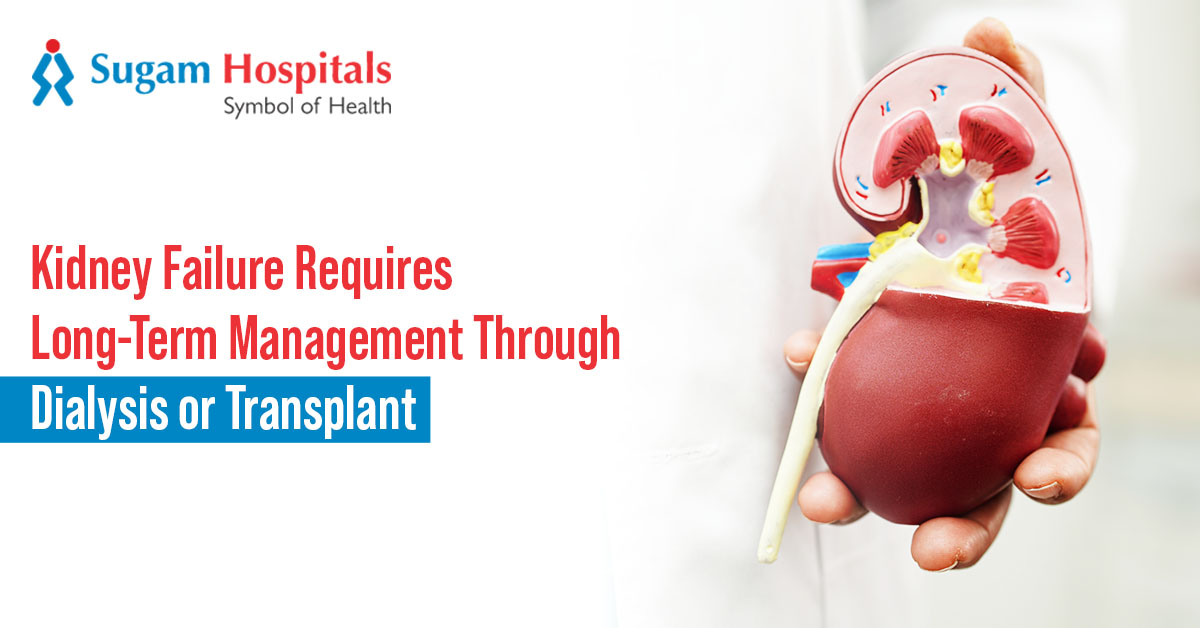
Kidney Failure Requires Long-Term Management Through Dialysis or Transplant
December 29, 2025 by adminOur kidneys are the quiet heroes that perform one of the most vital functions of the body like filtering waste, keeping fluids in balance and even helping in maintaining healthy blood pressure. However, when they fail to do so, wastes accumulate and this leads to a severe condition called kidney failure or end-stage renal disease (ESRD).
It is the point where the kidneys lose almost all of their capacity to filter and if no medical intervention is done, complications that could be fatal may occur. The chance of survival is there through modern therapies like dialysis and kidney transplantation, which allow many patients to have an active life again.
Kidney failure first, followed by long-term management through dialysis and transplant, along with the support of a specialist nephrologist. This blog unfolds the story of the disease, the treatment and the care required.
What Happens in Kidney Failure?
Kidney failure is a condition that results from the loss of about 85-95% of the normal functions of the kidneys and these organs are no longer able to maintain the body’s chemical balance. The reasons may be different, but the major ones are:
Diabetes: Excess sugar in the blood causes damage to the blood vessels in the kidneys.
Hypertension (High Blood Pressure): Narrows blood vessels and damages kidney filtration units.
Chronic Kidney Disease (CKD): The process of function of the kidneys is slowly going down over a period of years.
Glomerulonephritis: The immune system attacks the filters of kidneys.
Polycystic Kidney Disease: An inherited disorder that leads to the development of cysts in kidneys.
When kidneys do not work well, people often experience fatigue, swelling in the legs or face, nausea, confusion and less urine output. Still, kidney disease in the early stage is most of the time asymptomatic, hence the importance of routine check-ups and early treatment.
Dialysis: Supporting the Body When Kidneys Can’t
Dialysis is a procedure that keeps the patient alive by performing some of the kidney functions that are lost. It works to remove waste and extra fluid from the body. The process does not cure kidney failure but can make the patients live longer and feel better while waiting for a transplant or as part of a permanent treatment.
Basically, there are two types of dialysis:
1. Hemodialysis
- This method utilizes a machine to do the blood filtering through a dialyzer (artificial kidney).
- Typically, it is a hospital or a dialysis center procedure which is done 3 times a week.
- In order to have blood flow a vascular access (fistula or catheter) is needed.
2. Peritoneal Dialysis
- The method uses the peritoneum, which is the natural filter in the abdomen, to filter the blood.
- The procedure can be done at home, thus giving the patient freedom and control over the treatment.
- The method includes filling and draining the cleansing fluid through a catheter that is placed in the abdomen.
Determining the appropriate dialysis method depends on the medical condition, the patient’s lifestyle and preference. Such a decision is nephrologist’s expertise.
Kidney Transplant: The Closest Thing to a Cure
In many cases, a kidney transplant is the most favorable long-term solution. The process is the replacement of the recipient’s diseased kidney with a healthy one from a donor.
Benefits of Transplantation
- Improved quality of life with less strict diets.
- Ability to choose your own dialysis schedule or to not dialyze at all.
- Better energy, appetite and general physical condition.
Nevertheless, a transplant may not be the answer to every patient’s problem. Restrictions to eligibility may result from severe heart disease, infections or even old age. Besides that, it is necessary to take immunosuppressants, a type of medication that prevents rejection for life after the transplant.
The success rate of kidney transplants has become much better over time due to modern surgical methods and enhanced immunotherapy, however, the operation is still very delicate and requires a nephrology team for initial evaluation and follow-up care.
Kidney failure is a tough situation to deal with, but it shouldn’t be considered as a end. Using the proper combination of dialysis, transplantation and continuous specialist care, patients can actually renew their control over their health and quality of life.
If this is the case of you or a family member and you are suffering from kidney disease or pondering over the options of long-term management, then don’t hesitate to seek the help of experts. At Sugam Hospital, we are always ready to serve you with the complete care diagnostic, dialysis and transplant coordination and a compassionate, patient-focused approach.
So, if you are in need of tailored advice and state-of-the-art therapy, make an appointment with the best nephrologist in Chennai at Sugam Hospital where you will be accompanied with proficiency and care at every step of your kidney health journey.