

Managing Parkinson’s Disease Requires Medication, Physical Therapy and Support
Managing Parkinson’s Disease Requires Medication, Physical Therapy and Support
December 29, 2025 by adminParkinson’s Disease (PD) is a kind of neurological disorder that gradually impairs a person’s movement, muscle control and coordination. The condition is incurable as yet, but the patients can handle the symptoms largely through modern medicine, rehabilitation and supportive care, thus can live a decent and happy life. Living with Parkinson’s involves more than just taking drugs, it requires a mix of medical care, therapy and psychological support to be healthy over time.
Understanding Parkinson’s Disease
Parkinson’s is a condition caused by the death of brain nerve cells, mainly the ones in the substantia nigra. These nerve cells produce dopamine, which is a neurotransmitter that is responsible for smooth and coordinated muscle movements. Therefore, patients will have to face the first symptoms that are usually tremors, stiffness, etc. when the dopamine level is low enough.
It is true that the disease can be slowed down by an early diagnosis and regular management so the treatment and the lifestyle modifications should be introduced from day one.
1. The Role of Medication in Managing Parkinson’s
Drugs are the primary means through which Parkinson’s can be treated. Mostly, treatments are designed to increase or replace dopamine so as to alleviate symptoms and make movement easier.
Medications that are typically used are:
- Levodopa-Carbidopa: Through conversion into dopamine in the brain, it is the main agent that relieves stiffness and slowness.
- Dopamine Agonists: Do the same work as dopamine in the brain.
- MAO-B Inhibitors: They slow the enzyme that breaks down dopamine.
- COMT Inhibitors: They make Levodopa work for a longer time.
Different patients react in different ways to the same medicine with a neurologist, they will usually adjust the dosages to give the best effect and least side effects. Regular consultation with the doctor is necessary to continue treatment changes along with the progress of the disorder.
2. Physical Therapy: Movement is Medicine
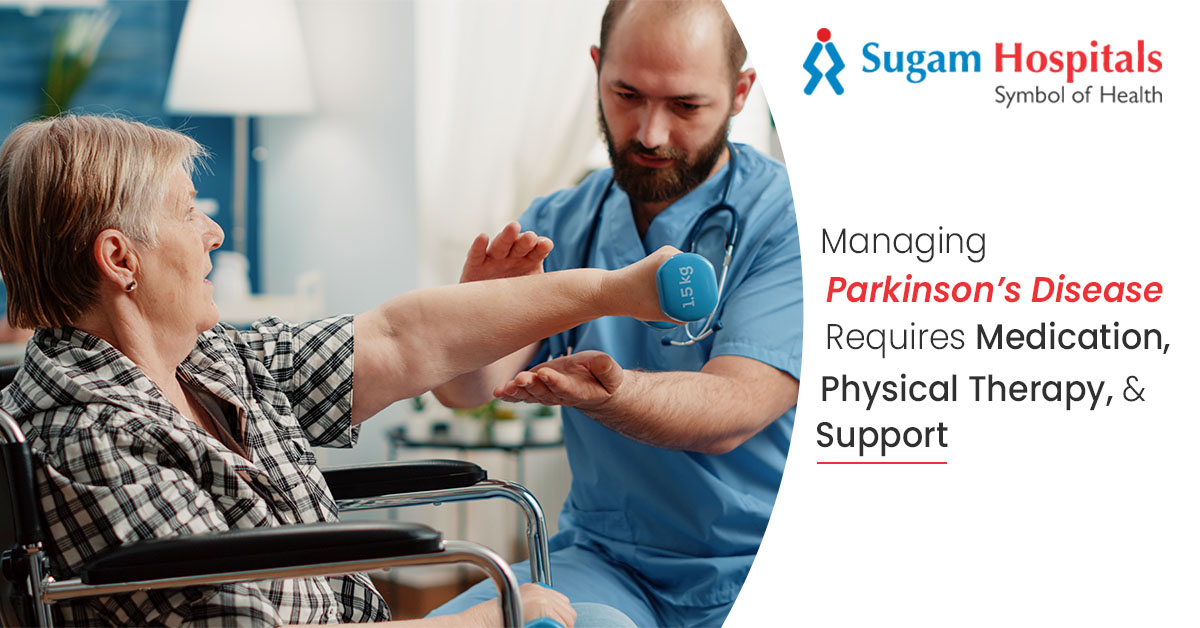
Medication is very helpful in managing changes that occur chemically in the brain though physical therapy is the one that really helps in dealing the physical impact of Parkinson’s on movement, balance and strength.
Physical therapy is centered around:
- Enhancing body movement and correct body alignment so as not to get stiff.
- Muscle strengthening to keep muscle tone.
- Balance activities to lower the risk of falling.
- Gait training to increase walking patterns and coordination.
Any one of these simple things like walking, stretching or practicing can lead to a huge difference. A great number of patients discover that by keeping to a regular exercise program they not only improve their mobility but also their mood and self-esteem.
3. The Importance of Occupational and Speech Therapy
Parkinson’s, in addition to impacting a person’s physical mobility, can also cause changes in the way one performs daily activities and communication.
- Through occupational therapy, patients learn how to change their surroundings and daily habits in order to make it easier and safer to do activities such as dressing or cooking.
- Those with speech difficulties due to Parkinson’s, such as slurred speech or a softer voice, can benefit from speech therapy which helps them to keep their speech clear and thereby communicate.
On the whole, these treatments help to keep the patient’s independence and give them the feeling that their life is still going on as usual.
4. Emotional and Social Support: A Vital Pillar
Living with Parkinson’s is not only a challenge for the body, but it also affects the emotions. Because the disease is chronic, feelings of depression, anxiety and frustration are typically experienced. The mental health of the patient, therefore, can be greatly improved with the help of the family, the caregivers and the professionals.
Support measures are:
- Participation in Parkinson’s support groups.
- Getting help from a counselor or therapist to build up one’s emotional strength.
- Doing activities which are pleasurable and involve social interaction.
Emotional support is a way of keeping the patients driven and optimistic while they are on long-term treatment.
5. A Comprehensive Approach for Long-Term Management
Good results, in fact, can be achieved when patients, caregivers and the medical teams work hand in hand. Frequent medical check-ups are necessary in following up the progression, changing the medication and suggesting the new treatments.
Changes in lifestyle such as proper nutrition, rest and positive social interaction, along with managing stress, will be of great help to the brain and the nervous system.
In essence, the story of Parkinson’s disease differs from one individual to another and a single treatment cannot be a solution for all. The regulation of the disorder with the help of a neurologist experienced in personalized care will be the right way as it will be adjusted according to the patient’s condition.
Reach out to the professionals at Sugam Hospital if you or your family member are showing early symptoms of Parkinson’s and require expert neurological care. We are equipped with the best neurology hospital in Chennai. and a holistic approach towards the patient, dedicated to delivering the most suitable and loving care to you in every phase of your Parkinson’s management.