

Understanding Post-Stroke Care Pathways and Functional Rehabilitation
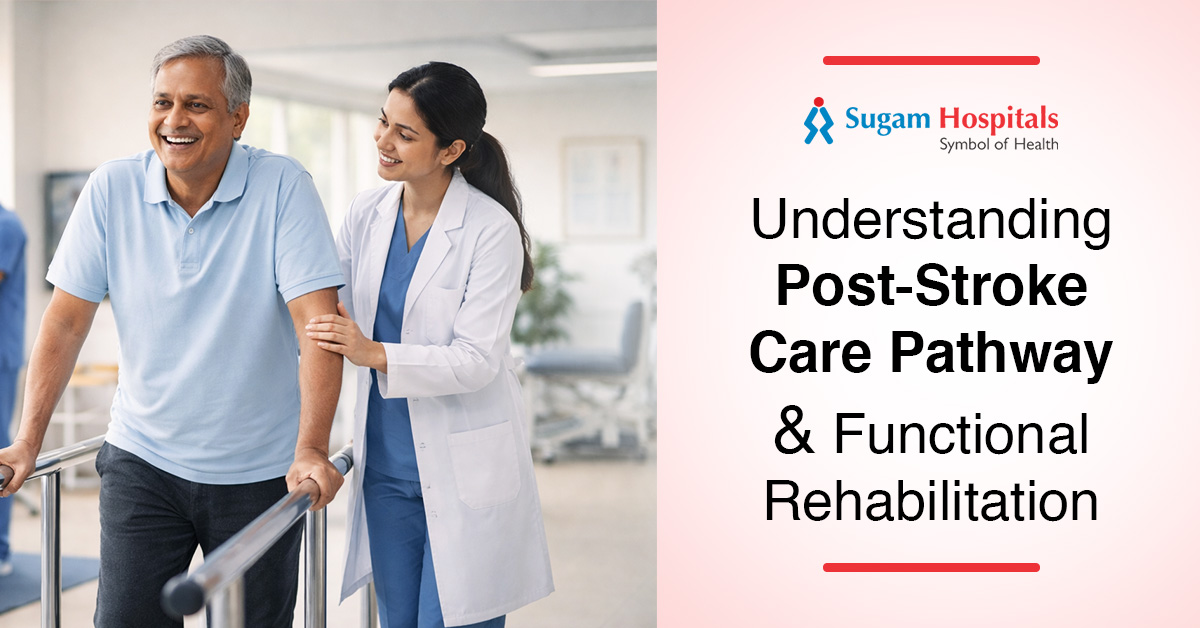
Understanding Post-Stroke Care Pathways and Functional Rehabilitation
March 17, 2026 by adminNobody expects a stroke. It does not announce itself. One moment life is completely ordinary, and the next, someone cannot lift their arm, find the words they want to say, or stand without falling. For the person experiencing it, the situation is frightening. For the family watching, it is overwhelming. But here is what gets lost in those first chaotic hours, survival is only the beginning.
What comes after is where the real work starts. And that work, when guided by the right people, leads to outcomes most families never imagined possible. Connecting early with the best neurologist in Chennai is not just a recommendation. It genuinely shapes how far a person can recover.
What the Brain Does After a Stroke
Here is something that surprises many people: the brain does not just sit passively after an injury. It actively tries to find new routes. Neighboring brain regions slowly take over functions that were lost a process called neuroplasticity. This is the entire reason rehabilitation works.
The catch is that this rewiring does not happen on its own. It needs consistent, purposeful stimulation. And it is far more responsive in the early weeks after a stroke than it will ever be again. Early movement and structured therapy during this window can fundamentally change the long-term outcome. Waiting is not neutral, it costs recovery time that cannot always be reclaimed.
How Recovery Unfolds- Phase by Phase
Stroke recovery moves through stages, and understanding what each stage is actually for helps families stay grounded without losing hope.
- The first two weeks are about stabilization and early activation. Once the patient is medically stable usually within 24 to 48 hours rehabilitation begins quietly but deliberately. Sitting up in bed, gentle limb movements, basic speech exercises. These small efforts prevent serious complications like blood clots, muscle stiffness, and chest infections that can set recovery back by weeks.
- Weeks two through twelve are where families often start seeing the shift they have been hoping for. The brain is at its most receptive during this window, and therapy becomes more intentional, a physiotherapist working on movement and strength, an occupational therapist helping relearn everyday tasks like dressing and moving safely, a speech therapist addressing communication and swallowing. They do not work in corners by themselves. They talk, reassess, and adjust as the patient shows them what they are capable of.
- Beyond three months, recovery continues at a steadier pace. Outpatient therapy, home exercise programs, and regular neurological follow-ups carry the momentum forward. This is also the phase where a lot of people quietly fall apart emotionally and nobody talks about it enough. Depression affects nearly one in three stroke survivors, and when it goes unrecognised, it quietly undermines physical recovery at the same time. Treating the whole person, not just the neurological damage, is what separates good post-stroke care from genuinely great post-stroke care.
What Rehabilitation Is Actually Rebuilding
Stroke rehabilitation is far wider in scope than most people assume. It targets several areas simultaneously:
- Motor function: Rebuilding strength, coordination, and balance through physiotherapy
- Speech and communication: Addressing aphasia, which affects the ability to find and use words, and dysarthria, which affects speech clarity
- Swallowing : Over half of stroke patients experience swallowing difficulties, raising the serious risk of lung infection if left unmanaged
- Cognition: Memory, concentration, and processing speed are commonly affected even in patients whose physical symptoms appear mild
- Daily independence: Occupational therapy helps patients reclaim the small but essential routines that give ordinary life its structure
Progress across all these areas is tracked using tools like the Barthel Index and the Modified Rankin Scale. These are not administrative formalities. They tell the clinical team whether the current approach is working and guide honest, realistic recovery planning for each individual patient.
Why Diagnostics Are a Quiet But Critical Part of Recovery
Blood sugar levels, cholesterol, kidney function, and clotting markers all influence how medications perform and how much therapy a patient can safely handle day to day. A small abnormality that goes undetected can quietly affect everything from medication dosing to therapy tolerance. This is why having access to the best diagnostic centre Chennai that is accurate and available around the clock is genuinely part of good stroke care. At Sugam Hospital, the clinical laboratory operates 24 hours a day and has been part of the External Quality Assurance Scheme of CMC Vellore for over 15 years meaning every result informing a care decision is one that can be trusted.
Recovery from stroke is not a straight line. There are harder days and better ones. But the trajectory, for patients who receive structured and consistent care, points upward. At Sugam Hospital, post-stroke care is built around the person supported at every stage by experienced specialists, reliable diagnostics, and a team that stays invested long after the crisis has passed. Because recovery does not end at discharge. It is just getting started.