

What Is Pericarditis and Why Does It Occur?
What Is Pericarditis and Why Does It Occur?
February 25, 2026 by adminWhen someone experiences chest pain, the first thought that frightens them is usually that of a heart attack. However, not all cardiac pain is due to blocked arteries. A fairly unknown situation in which a person can experience a sharp chest discomfort is pericarditis. Although it is mostly a condition that can be easily treated, if the diagnosis is delayed, it can cause complications. Knowing what pericarditis is and why it happens, people will be able to get the right care at the right time, and also, they will not feel so much anxiety for no reason.
We will try to explain pericarditis in this blog in a manner that is easy to understand, we will discuss its causes, symptoms, and the risks, and also we will give a brief overview of when it becomes necessary to see a doctor.
Understanding Pericarditis
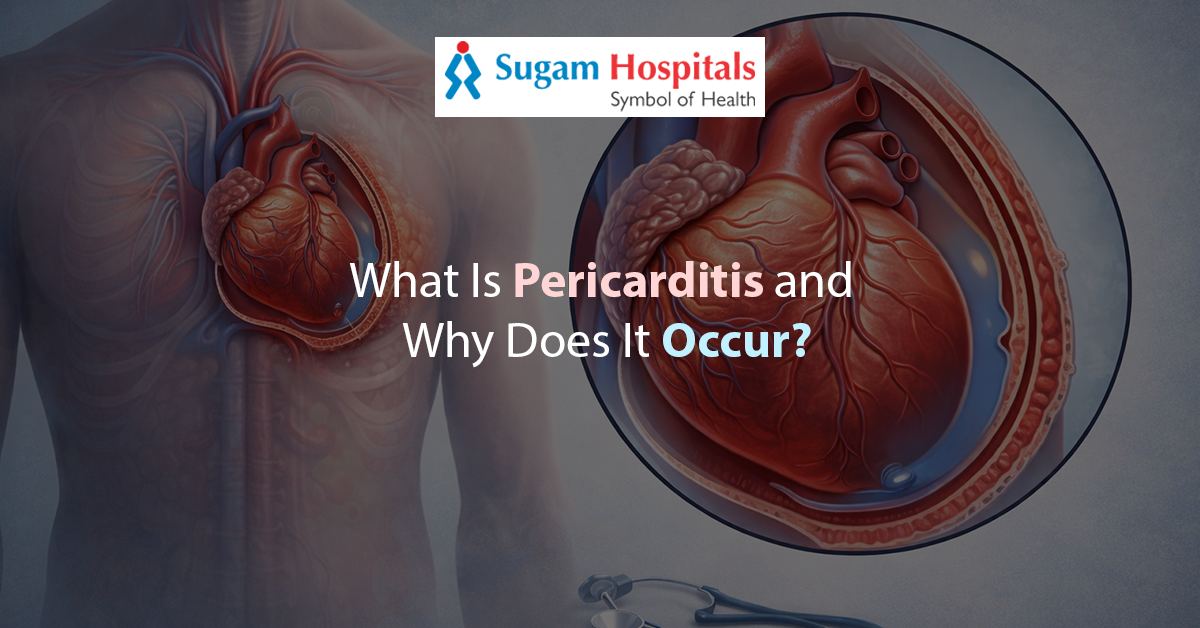
The heart is enclosed in a thin, two-layered protective sac known as the pericardium. The sac aids in lessening the friction between the heartbeats, and it also supports the heart in the chest.
Pericarditis is a situation in which the sac is inflamed. The swelling may cause the sac to become irritated, give the patient a feeling of pain in the chest and sometimes even cause the accumulation of the fluid around the heart. The disease can be any age, but it is mostly found in younger adults and people of middle age.
Pericarditis can come abruptly and it can be gone for a few days or weeks. There is also a possibility that pericarditis may return or become chronic if the source of the problem is not figured out.
Common Causes of Pericarditis
Pericarditis is not a condition that typically comes about on its own without some kind of trigger. The inflammation is very often associated with one or more of the following factors:
- Viral infections such as flu or respiratory infections, which account for the majority of cases
- Bacterial or fungal infections, however, are rare
- Autoimmune diseases such as lupus or rheumatoid arthritis
- Cardiac events, for example, a recent heart attack or heart surgery
- Chest injury or trauma that causes irritation of the pericardial layers
- Kidney failure, when the accumulation of waste can cause inflammation of the pericardium
- Certain drugs or radiation therapy, very few cases
Occasionally, it is not possible to determine the cause of pericarditis. This is referred to as idiopathic pericarditis, and it can still be treated with the appropriate care.
Symptoms That Should Not Be Ignored
The symptoms of pericarditis may mimic those of other cardiac diseases; therefore, a doctor’s exam is necessary. Typical indications are:
- Intense or needle-like pain in the chest, frequently getting worse while lying down
- A pain that gets better when sitting up or leaning forward
- Difficulty in breathing, particularly when lying down
- Fever or the feeling of being generally weak
- Irregular or rapid heartbeats
At times, pericarditis may be confused with a heart attack since the pain may vary with posture or breathing. Nevertheless, only a physical examination can provide the definite answer.
How Pericarditis Is Diagnosed
Physicians use clinical findings and diagnostic tests together to locate pericarditis. The examination usually consists of:
- Physical examination to find typical heart sounds
- Electrocardiogram for locating electrical changes
- Echocardiogram to see if there is liquid in the sac around the heart
- Blood tests to find infection or inflammation
- Imaging, when the doctor suspects complications
- Prompt recognition aids in the avoidance of the buildup of fluid and lessens the probability of the heart being damaged in the long run.
Treatment and Recovery
Treatment is primarily aimed at comforting the patient by removing inflammation, controlling pain, and eventually, dealing with the root cause. The majority of patients are given medications and advised rest, and thus, they make a good response to this treatment.
Recovery can be a mix of:
- Inflammatory drugs to lower the swelling
- Pain relief and limiting physical activity
- If there is an infection or an autoimmune condition, then treatment will be directed accordingly
- Monitoring closely for a possible return of the condition
- If treatment is not delayed, a large proportion of people get well entirely within a short period of time and can go back to their normal activities without any heart complications remaining.
Pericarditis is a controllable heart disease if detection is done at the early stage, however, it is packed with dangerous outcomes if symptoms are ignored. Any of these signs, which are a continuous chest pain, trouble breathing, and an unexplainable feeling of weakness, must not be disregarded under any circumstances. Diagnosis made by a specialist and the appropriate treatment are the results of visiting a doctor without delay.
When it comes to a full examination and specialized cardiac care, Sugam Hospital is a place where you can put your trust as the top cardiology hospital in Chennai. Sugam is equipped with the latest technology for diagnostics and provides a patient-centered approach to cardiac management that is beneficial for long-term heart health.