

What Is Dysmenorrhea? Understanding Painful Periods
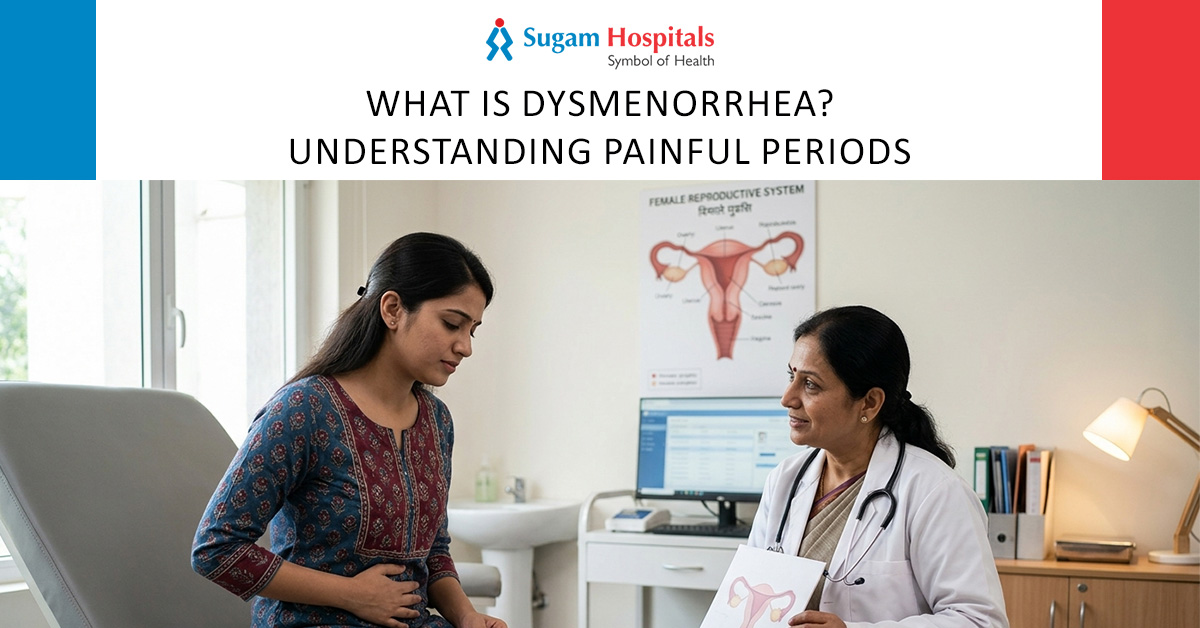
What Is Dysmenorrhea? Understanding Painful Periods
March 28, 2026 by adminFor generations, painful periods have been handed down as something women simply endure. “It is normal.” “Everyone goes through it.” “It will pass.” These responses, however well-meaning, have caused real harm not because period pain is always sinister, but because that blanket reassurance has trained women to stop questioning pain that sometimes genuinely deserves clinical attention. Dysmenorrhea is the medical term for painful menstruation, and understanding it properly what it is, why it happens, and when it crosses a line is something every woman deserves access to. At Sugam Hospital, our gynecologist specialist in Chennai approaches period pain the way all pain should be approached: as a signal worth listening to, not dismissing.
What Dysmenorrhea Actually Is
Dysmenorrhea refers to pain that occurs before or during menstruation, typically felt as cramping in the lower abdomen. It can radiate to the lower back and thighs, arrive with nausea, headaches, fatigue, or loose stools, and range from mildly uncomfortable to genuinely debilitating. The distinction that matters most clinically is not how severe the pain is, it is whether the pain has an underlying cause or not.
This is where dysmenorrhea splits into two distinct categories, and that split changes everything about how it is managed.
Primary Dysmenorrhea: Pain Without an Underlying Condition
Primary dysmenorrhea is the more common form. It is not caused by any structural problem with the reproductive organs. Instead, it is driven by prostaglandins hormone-like compounds produced by the uterine lining during menstruation. High levels of prostaglandins cause the uterus to contract more intensely, reducing blood flow to the uterine muscle and producing the cramping pain most women recognize.
Primary dysmenorrhea typically begins within a year or two of the first period, tends to be worst in the first one to two days of the cycle, and often improves with age or after childbirth though neither of those outcomes is guaranteed. The pain pattern is relatively predictable month to month.
Managing primary dysmenorrhea usually involves:
- Non-steroidal anti-inflammatory drugs like ibuprofen or naproxen, which work by reducing prostaglandin production rather than simply masking pain
- Hormonal contraception in some cases, which reduces the thickness of the uterine lining and consequently lowers prostaglandin levels
- Heat therapy, which genuinely helps by relaxing uterine muscle contractions
- Lifestyle adjustments including regular physical activity, which has evidence behind it for reducing menstrual pain over time
The key point here is that primary dysmenorrhea, while painful is not a disease. It is a physiological process that can usually be managed effectively once it is properly understood.
Secondary Dysmenorrhea: When Pain Has a Cause
Secondary dysmenorrhea is different. The pain here is caused by an identifiable condition within the reproductive system. It tends to develop later in life,often in the late twenties or thirties and unlike primary dysmenorrhea, it frequently worsens over time rather than settling.
The conditions most commonly responsible include endometriosis, adenomyosis, uterine fibroids, ovarian cysts, and pelvic inflammatory disease. Each of these has its own clinical profile, its own treatment pathway, and its own implications for fertility and long-term reproductive health. This is why secondary dysmenorrhea cannot be managed with painkillers alone the underlying cause needs to be identified and addressed directly.
Endometriosis deserves specific mention because it is one of the most underdiagnosed conditions in women’s health globally. It occurs when tissue similar to the uterine lining grows outside the uterus on the ovaries, fallopian tubes, or elsewhere in the pelvic cavity. The pain it produces is often severe and can extend beyond menstruation into the entire cycle. The average time between symptom onset and diagnosis remains shockingly long, largely because the pain gets normalized and women are repeatedly told it is just bad periods.
Signs That Period Pain Needs Proper Investigation
Not every woman with painful periods has secondary dysmenorrhea. But certain patterns suggest that what is happening deserves more than symptomatic management:
- Pain that is getting progressively worse with each cycle rather than staying consistent
- Pain that begins several days before menstruation and continues well after it ends
- Periods that are noticeably heavier than they used to be
- Pain during intercourse, particularly deep penetration
- Difficulty conceiving after a period of trying
- Pain that does not respond meaningfully to standard anti-inflammatory medications
Any of these patterns warrants a conversation with a gynaecologist specialist rather than another month of managing alone. The evaluation is not complicated a clinical history, a pelvic examination, and an ultrasound will identify most underlying causes. What is complicated is the years lost to pain that could have been investigated and addressed far sooner.
How Dysmenorrhea Affects Daily Life and Why That Matters
Period pain that forces a woman to miss work, cancel plans, or spend days in bed is not a minor inconvenience. It is a quality of life issue with real professional, social, and psychological consequences. Studies consistently show that dysmenorrhea is one of the leading causes of short-term work and school absenteeism among women, yet it remains significantly underreported and undertreated because the cultural narrative around it discourages women from seeking help.
This is something we feel strongly about at Sugam Hospital. Pain that disrupts a woman’s life on a monthly basis is not something she should simply adapt to. It is something that deserves proper clinical attention, an honest diagnosis, and a management plan built around her specific situation.
Painful periods are common. That does not make them normal in the sense of being acceptable or inevitable. Dysmenorrhea exists on a spectrum from manageable primary pain to secondary pain driven by conditions that require genuine medical intervention. The difference between the two is not always obvious without proper evaluation, which is exactly why self-diagnosis and self-management have a ceiling.
At Sugam Hospital, our gynaecologist specialist is here to help women understand what their bodies are telling them clearly, without judgment, and with the clinical depth that turns a monthly source of suffering into something that can actually be addressed. That conversation is always worth having.