

Best Diet Plan for PCOS: Foods to Eat and Avoid
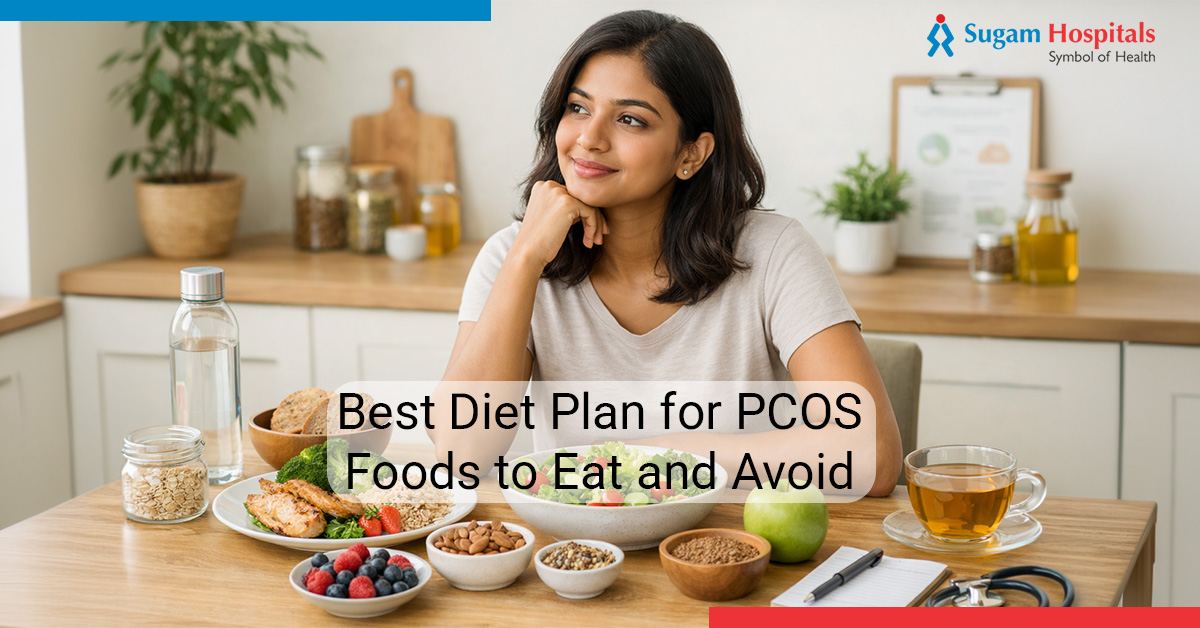
Best Diet Plan for PCOS: Foods to Eat and Avoid
April 6, 2026 by adminPCOS is one of those conditions that shows up differently in almost every woman it affects. One person struggles with irregular periods and weight gain. Another deals with acne, hair loss, and difficulty conceiving. A third has all of the above, plus anxiety and exhaustion that she has been told is unrelated. What connects all of these experiences is the underlying hormonal and metabolic disruption that PCOS creates and diet sits right at the center of managing that disruption. Not as a cure. Not as a replacement for medical care. But as a daily, consistent lever that genuinely moves the needle on how a woman with PCOS feels and functions.
At Sugam Hospital, our gynaecologist specialist in Chennai regularly sees women who have tried every diet they have read about online and are more confused than when they started. This blog is an attempt to cut through that noise with something more honest and more useful.
Why Diet Matters So Much in PCOS
The majority of women with PCOS have some degree of insulin resistance a state where the body’s cells do not respond efficiently to insulin, causing the pancreas to produce more of it to compensate. Elevated insulin levels stimulate the ovaries to produce excess androgens male hormones like testosterone which drive many of the most visible PCOS symptoms, including irregular ovulation, acne, and excess hair growth.
This is why diet in PCOS is not simply about calories or weight. It is about managing insulin response. A food that causes a rapid spike in blood sugar triggers a corresponding insulin spike, which feeds directly into the androgen excess that makes PCOS symptoms worse. Understanding this mechanism changes how food choices are framed from aesthetic decisions to metabolic ones.
Foods That Work With PCOS
The foods that tend to support PCOS management share a common thread, they keep blood sugar stable, support hormone balance, and reduce the chronic low-grade inflammation that is almost universally present in women with the condition.
Complex carbohydrates over refined ones. The body processes complex carbohydrates found in whole grains, legumes, and vegetables far more slowly than refined carbohydrates like white rice, white bread, and processed snacks. That slower digestion translates to a gentler rise in blood sugar and a more moderate insulin response. Switching refined carbohydrates for complex ones is one of the most impactful dietary changes a woman with PCOS can make, and it does not require eliminating carbohydrates entirely a point worth emphasizing because many women do exactly that and feel worse for it.
Foods that actively support this approach include:
- Oats, millets, quinoa, and brown rice as staple carbohydrate sources
- Lentils, chickpeas, and kidney beans high in fiber and protein, which both slow glucose absorption
- Non-starchy vegetables like spinach, broccoli, cauliflower, cucumber, and capsicum
- Berries lower in sugar than most fruits and high in antioxidants that help counter inflammation
- Fatty fish like salmon and mackerel, which provide omega-3 fatty acids with genuine anti-inflammatory evidence behind them
- Nuts and seeds particularly flaxseeds and walnuts, which support hormone metabolism
Protein at every meal. Protein slows gastric emptying, reduces post meal blood sugar spikes, and helps with satiety in a way that prevents the kind of erratic eating patterns that destabilize blood sugar throughout the day. Eggs, legumes, lean poultry, Greek yogurt, and paneer are practical, accessible protein sources that fit into most Indian dietary patterns without requiring a complete overhaul.
Foods That Make PCOS Harder to Manage
This is where honest guidance matters more than a long list of things to feel guilty about. The goal is not elimination for its own sake, it is understanding which foods consistently work against the metabolic stability that PCOS management depends on.
Refined carbohydrates and added sugars are the most significant dietary contributors to insulin spikes. White rice eaten in large quantities, sugary beverages including fruit juices and packaged drinks, sweets, and ultra-processed snacks all raise blood glucose rapidly and trigger the insulin response that amplifies androgen production. These do not need to disappear from life entirely, but their frequency and portion size genuinely matter.
Foods worth limiting or monitoring include:
- Sugary beverages; sodas, packaged juices, flavored coffees, and energy drinks
- Refined flour products: white bread, maida-based snacks, and most commercially packaged biscuits
- High-sugar dairy products like flavored yogurts and sweetened condensed milk
- Processed and fried foods high in trans fats, which worsen inflammation
- Alcohol, which affects liver function and hormone metabolism in ways that are particularly unhelpful in PCOS
Dairy deserves a nuanced mention. Some women with PCOS find that full-fat dairy worsens acne and hormonal symptoms, while others tolerate it without issue. This is an area where individual response matters more than a blanket rule paying attention to how the body responds is more informative than following a generalized restriction.
The Lifestyle Context Diet
Diet alone does not work. Sleep deprivation raises cortisol, which worsens insulin resistance. Chronic stress has a direct hormonal impact. Physical activity particularly resistance training and moderate-intensity cardio improves insulin sensitivity in ways that no dietary change can fully replicate on its own. These are not add-ons to a diet plan. They are the environment the diet has to work within.
There is no single PCOS diet that works identically for every woman. The underlying principle managing insulin response, reducing inflammation, and supporting hormonal balance through consistent food choices is universal. But how that principle translates into a practical daily eating pattern depends on individual metabolic profile, food preferences, cultural context, and how PCOS is presented in that specific person.
This is exactly why dietary guidance for PCOS works best when it comes from a clinical conversation rather than a generic plan. At Sugam Hospital, our gynaecologist specialists work alongside nutritional guidance to help women with PCOS build an approach that is medically grounded, personally realistic, and genuinely sustainable because a plan that fits real life is always the one that actually gets followed.