

How Obesity Affects Joint Health
How Obesity Affects Joint Health
May 12, 2026 by adminYour knees absorb roughly four times your body weight with each step. Walk up a flight of stairs, and that number climbs to nearly seven times. Now imagine carrying an extra 20 or 30 kilograms every single day, that’s the reality your joints are living with when obesity goes unaddressed.
If you’ve been experiencing persistent knee pain, stiff hips, or aching ankles and wondering where it’s all coming from, your weight could be at the center of it. Speaking with an ortho doctor early can make a significant difference in how this story ends for you.
The Load That Never Lets Up
Joints are remarkable structures, built to handle pressure, absorb shock, and keep you moving through decades of life. But they have limits. Excess body weight doesn’t just add a little extra pressure; it fundamentally changes how your joints function and how quickly they wear down.
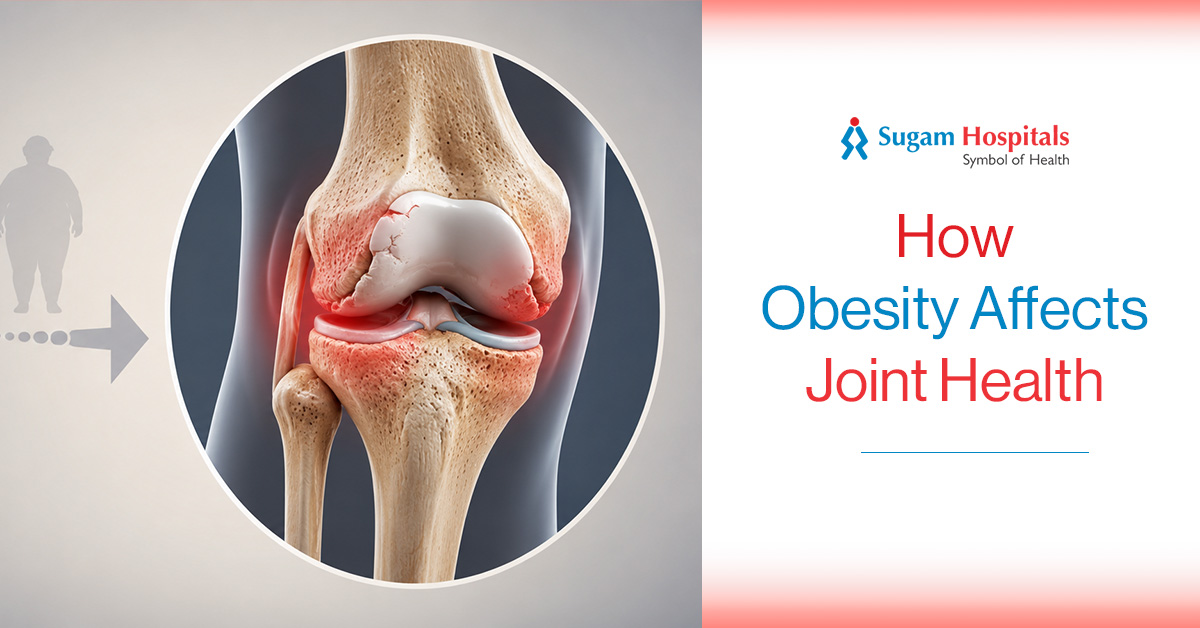
Cartilage, the smooth, rubbery tissue that cushions the ends of your bones, has no blood supply of its own. It depends on movement and the compression-release cycle of normal activity to receive nutrients. When that cartilage is constantly overloaded, it breaks down faster than it can repair itself. That cushioning slowly wears away. Bones start making contact where they shouldn’t. And the mild ache you once brushed off after a long day becomes something you feel the moment you get out of bed, interrupting sleep, making simple movements a negotiation, and quietly shrinking the life you’re used to living.
The joints most affected are predictable, the knees, hips, and lower back take the brunt of it. But the ankles and feet suffer too, often quietly, until the damage is already significant.
Osteoarthritis: The Most Common Consequence
Osteoarthritis (OA) is the most direct link between obesity and joint disease. The numbers are hard to ignore people living with obesity are four to five times more likely to develop knee osteoarthritis than those at a healthy weight. What’s more, the progression tends to be faster and more severe.
Here’s what makes it worse than just a mechanical problem:
- Inflammation plays an equal role. Fat tissue, especially visceral fat, actively produces inflammatory compounds called adipokines and cytokines. These chemicals don’t stay contained; they circulate through the body and attack joint tissue directly.
- The damage becomes bilateral. Unlike an injury that affects one joint, obesity-related arthritis often develops in both knees or both hips simultaneously, which limits your ability to compensate or rest one side.
- Pain leads to inactivity, inactivity leads to weight gain. This cycle is where many patients find themselves trapped, hurting too much to exercise, but gaining weight because they can’t move.
Breaking out of that cycle requires a clear plan, and that plan almost always starts with a proper clinical assessment.
It’s Not Just the Knees
People often associate joint pain with the knees, but obesity creates widespread musculoskeletal stress. The lower back is under constant compressive load when weight is carried predominantly around the abdomen. The hip joints already one of the more complex joints in the body, see accelerated labral wear and increased risk of requiring replacement surgery. Even the small joints of the feet flatten under prolonged overload, leading to conditions like plantar fasciitis and flat feet that make every step uncomfortable.
Gout, a form of inflammatory arthritis triggered by high uric acid levels, is also significantly more prevalent in people who are overweight. Fatty tissue interferes with uric acid metabolism, and the resulting crystal deposits in joints cause sudden, intense pain, particularly in the big toe and ankle.
The Heart Connection You Might Not Expect
Here’s something most people don’t fully connect: obesity doesn’t just damage your joints, it puts your heart under enormous strain at the same time. Chronic inflammation, high blood pressure, disrupted cholesterol levels, and insulin resistance all come with excess weight. The same lifestyle factors that are destroying your cartilage are quietly building risk for cardiovascular disease.
This is why joint pain in an obese patient is never just an orthopaedic conversation. A heart specialist will often find that addressing metabolic risk factors managing blood pressure, improving lipid profiles, controlling blood sugar also reduces the systemic inflammation that accelerates joint damage. The body doesn’t work in isolated systems. What affects one, affects the other.
What Can Actually Be Done
The good news is that even modest weight loss produces measurable joint relief. Studies show that losing just 10% of body weight can reduce knee joint load by up to 40% and significantly cut pain scores in OA patients. The joint doesn’t need to be perfect, it just needs less pressure.
- Physiotherapy and low-impact exercise: Swimming, cycling, and water aerobics strengthen the muscles around your joints without overloading them, a smarter way to rebuild than high-impact alternatives.
- Nutritional guidance: Anti-inflammatory foods, omega-3s, leafy greens, whole grains, do more than support your joints. They protect your heart too, which matters more than most people realise.
- Medical management: Depending on severity, your orthopaedic team may suggest injections, bracing or in more advanced cases, joint replacement to restore meaningful mobility.
At Sugam Hospital, we give you a clear, honest picture, where your joints stand, which options suit your specific condition, and what recovery realistically looks like for you. There’s no guesswork, and there’s no rushing you into a procedure you don’t fully understand.
When to Stop Waiting
Joint pain from obesity doesn’t usually resolve on its own. The longer the load continues without intervention, the deeper the structural damage goes. If you’re struggling with persistent pain in your knees, hips, or back and especially if you know weight is a contributing factor, the right time to seek help is now, not when it gets unbearable.
At Sugam Hospital, our specialists in both orthopaedics and cardiology work in close coordination, which matters when your health concerns span more than one system. Whether it’s a thorough orthopaedic evaluation or cardiac care from a trustedheart specialist in Chennai, Sugam Hospital brings both together with the expertise and infrastructure that actually backs that claim up.
Your joints have been carrying the weight long enough. Let the right team help you carry the rest.