

Hysterectomy: Everything You Need to Know About the Procedure, Recovery, and Advanced Treatment Options
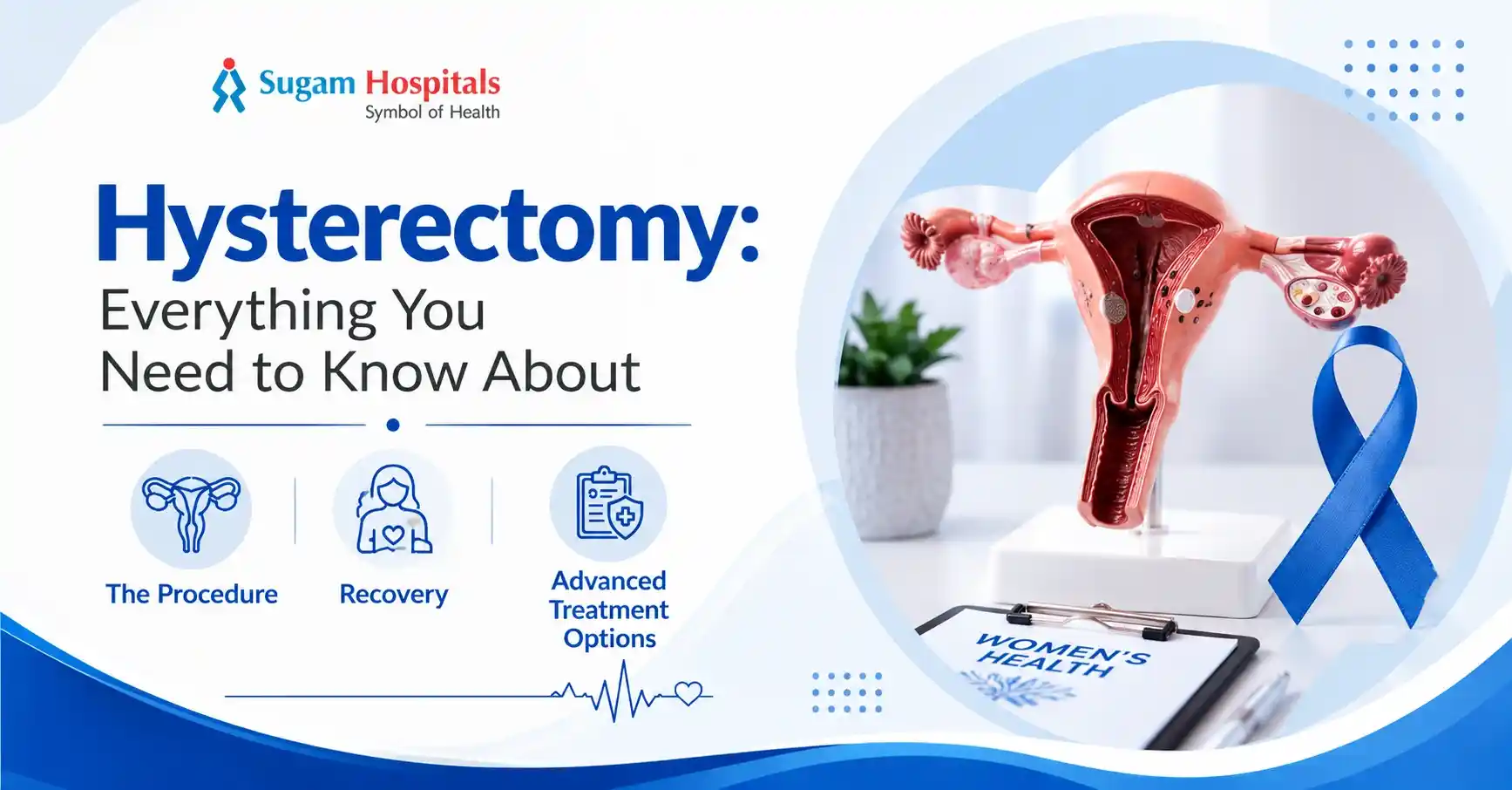
Hysterectomy: Everything You Need to Know About the Procedure, Recovery, and Advanced Treatment Options
July 8, 2026 by adminA hysterectomy is a surgical procedure to remove the uterus (womb). It is one of the most commonly performed gynecological surgeries worldwide and is recommended when other treatment options are ineffective or unsuitable. Depending on the patient’s condition, the surgery may also involve the removal of the cervix, fallopian tubes, and ovaries.
Modern advancements in gynecologic surgery have significantly improved hysterectomy outcomes. Today, minimally invasive techniques such as laparoscopic and robotic-assisted hysterectomy offer less pain, smaller incisions, shorter hospital stays, and faster recovery compared to traditional open surgery.
At Sugam Hospital, hysterectomy procedures are performed using advanced surgical techniques based on the patient’s condition and treatment requirements. Recent trends show a growing preference for minimally invasive hysterectomy due to improved safety, precision, and patient outcomes.
What Is a Hysterectomy?
A hysterectomy is a surgical procedure performed to remove the uterus. After the surgery, a woman will no longer experience menstrual periods and cannot become pregnant.
The type of hysterectomy recommended depends on the underlying medical condition and overall health of the patient.
Why Is a Hysterectomy Performed?
A doctor may recommend a hysterectomy to treat various gynecological conditions, including:
- Uterine fibroids causing heavy bleeding or pain
- Endometriosis
- Adenomyosis
- Chronic pelvic pain
- Abnormal uterine bleeding
- Uterine prolapse
- Precancerous conditions of the uterus or cervix
- Gynecologic cancers such as cervical, uterine, ovarian, or endometrial cancer
When medications, hormone therapy, or less invasive procedures fail to provide relief, hysterectomy may be considered a definitive treatment option.
Types of Hysterectomy
1. Total Hysterectomy
Removes the entire uterus along with the cervix. This is the most commonly performed type.
2. Partial (Supracervical) Hysterectomy
Removes only the upper part of the uterus while preserving the cervix.
3. Radical Hysterectomy
Removes the uterus, cervix, surrounding tissues, upper vagina, and sometimes nearby lymph nodes. It is usually performed for certain gynecologic cancers.
4. Hysterectomy with Salpingo-Oophorectomy
Involves removing the uterus along with one or both ovaries and fallopian tubes when medically necessary.
Advanced Hysterectomy Procedures Available Today
Laparoscopic Hysterectomy
This minimally invasive technique uses small incisions and a camera-guided surgical system to remove the uterus.
Benefits include:
- Smaller scars
- Less blood loss
- Reduced postoperative pain
- Faster recovery
- Shorter hospital stay
Robotic-Assisted Hysterectomy
Robotic surgery has become increasingly popular in recent years. The surgeon controls robotic instruments that provide enhanced precision, improved visualization, and greater surgical dexterity. Research shows growing adoption of robotic-assisted hysterectomy, especially for complex gynecologic conditions and cancer-related procedures.
Advantages include:
- Greater surgical precision
- Enhanced 3D visualization
- Better access to difficult anatomical areas
- Reduced tissue trauma
- Faster return to normal activities
Vaginal Hysterectomy
In this approach, the uterus is removed through the vagina without external abdominal incisions.
Benefits include:
- No visible scars
- Less pain
- Faster healing
- Lower risk of complications
For eligible patients, vaginal hysterectomy remains one of the preferred minimally invasive approaches.
How Is a Hysterectomy Performed?
The procedure is performed under general anesthesia and may take between one to four hours depending on the surgical approach and complexity.
The surgeon may perform the surgery through:
- An abdominal incision (open surgery)
- Small laparoscopic incisions
- Robotic-assisted techniques
- The vaginal route
The choice of approach depends on factors such as uterine size, underlying condition, previous surgeries, and overall patient health.
Benefits of Hysterectomy
A hysterectomy can significantly improve quality of life for women suffering from chronic gynecological conditions.
Key benefits include:
- Relief from heavy menstrual bleeding
- Elimination of chronic pelvic pain
- Resolution of fibroid-related symptoms
- Treatment of certain cancers
- Improved daily functioning and comfort
- Reduced need for ongoing treatments
Risks and Possible Complications
Like any surgery, hysterectomy carries certain risks, although complications are generally uncommon when performed by experienced surgeons.
Potential risks include:
- Infection
- Bleeding
- Blood clots
- Injury to nearby organs
- Anesthesia-related complications
- Urinary tract injury
- Delayed healing
Patients should discuss individual risks and benefits with their gynecologist before surgery.
Recovery After Hysterectomy
Recovery time varies depending on the surgical technique used.
| Procedure Type | Typical Recovery Time |
| Vaginal Hysterectomy | 2–4 weeks |
| Laparoscopic Hysterectomy | 2–4 weeks |
| Robotic Hysterectomy | 2–4 weeks |
| Open Abdominal Hysterectomy | 6–8 weeks |
Many patients undergoing minimally invasive procedures return to routine activities sooner than those who undergo open surgery. Studies continue to show a global shift toward minimally invasive hysterectomy because of improved recovery outcomes.
Latest Trends in Hysterectomy Surgery
The field of gynecologic surgery continues to evolve with innovative technologies and techniques.
Current advancements include:
- Robotic-assisted surgical platforms
- Single-port minimally invasive surgery
- Enhanced recovery after surgery (ERAS) protocols
- Improved 3D surgical imaging
- Precision-guided laparoscopic systems
- Natural orifice surgery (vNOTES) for selected patients
These innovations aim to reduce pain, shorten hospital stays, improve cosmetic outcomes, and enhance patient safety.
Hysterectomy Treatment at Sugam Hospital
Sugam Hospital offers advanced woman & child care and advanced surgical treatment options for women requiring hysterectomy for conditions such as uterine fibroids, endometriosis, abnormal uterine bleeding, adenomyosis, uterine prolapse, and certain gynecological cancers. Depending on the patient’s condition and clinical requirements, the hospital provides minimally invasive hysterectomy approaches, including laparoscopic and robotic-assisted procedures, with a focus on patient safety, surgical precision, and improved recovery outcomes.
When Should You Consult a Doctor?
You should seek medical evaluation if you experience:
- Heavy or prolonged menstrual bleeding
- Severe pelvic pain
- Large uterine fibroids
- Symptoms of uterine prolapse
- Endometriosis not responding to treatment
- Suspicion of gynecological cancer
Early diagnosis helps determine whether hysterectomy or alternative treatments are the most suitable option.
Conclusion
A hysterectomy is a highly effective surgical treatment for several gynecological conditions, including fibroids, endometriosis, abnormal bleeding, and certain cancers. With advancements in minimally invasive and robotic-assisted surgery, patients can now benefit from safer procedures, reduced discomfort, and faster recovery. Consulting an experienced gynecologic surgeon can help determine the most appropriate treatment approach based on individual health needs and goals.