

Top 20 High Protein Foods: Best Protein Sources for Muscle Growth and Overall Health
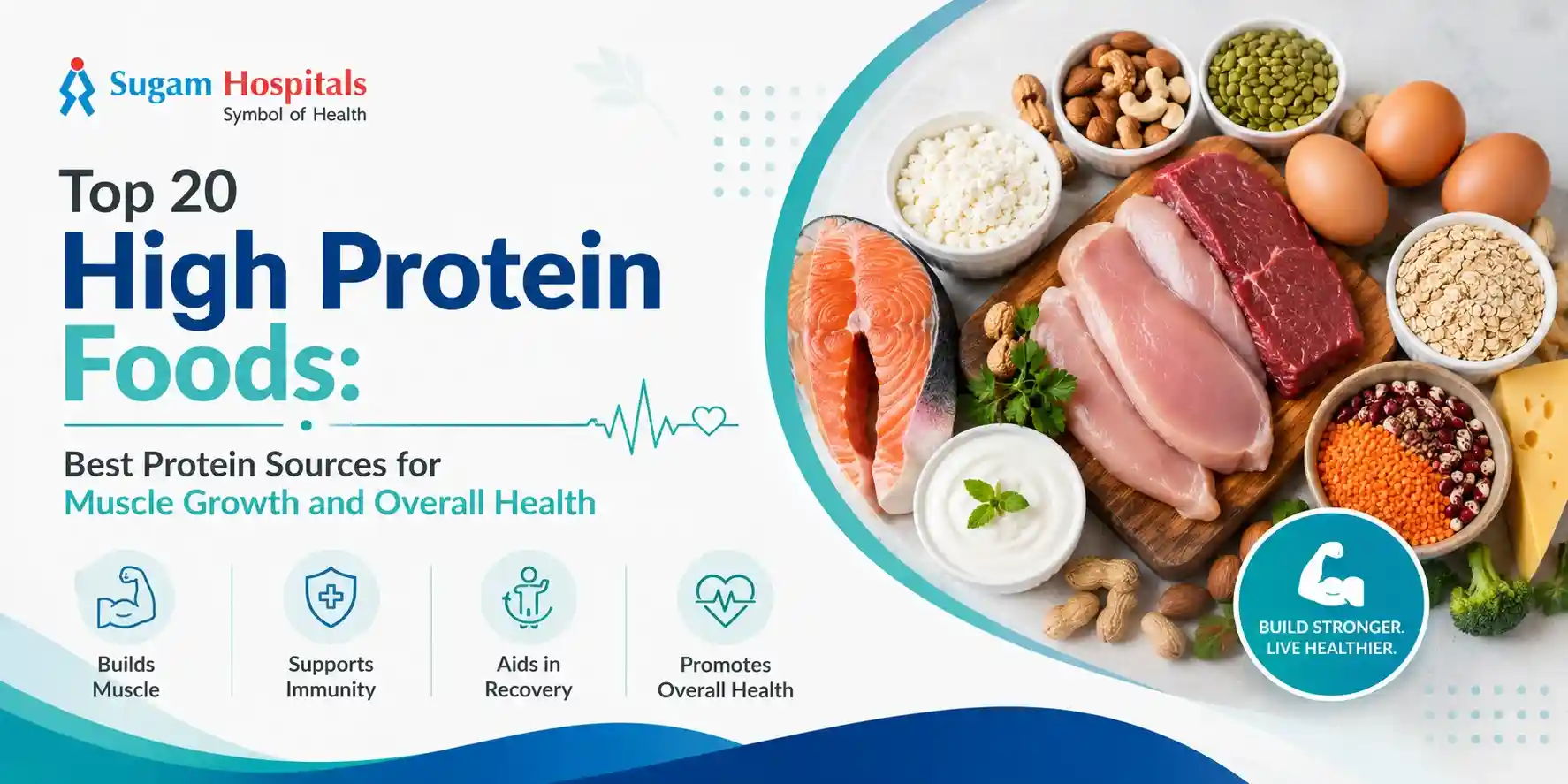
Top 20 High Protein Foods: Best Protein Sources for Muscle Growth and Overall Health
July 9, 2026 by adminOne of the most important nutrients your body need on a daily basis is protein. It helps build and repair muscles, supports healthy bones, boosts immunity, and keeps you feeling full for longer. Whether your goal is weight management, muscle gain, or maintaining overall health, including high protein foods in your meals can make a significant difference.
Many people assume protein only comes from meat, but there are plenty of protein-rich foods available for both vegetarians and non-vegetarians. From eggs and chicken to lentils and paneer, adding a variety of foods high in protein can help you meet your daily nutritional requirements.
In this guide, we’ll explore the top 20 best high protein foods, their nutritional benefits, and simple ways to include them in your diet.
Why Is Protein Important?
Protein plays several essential roles in the body:
- Builds and repairs muscles and tissues
- Supports healthy skin, hair, and nails
- Helps produce enzymes and hormones
- Improves satiety and appetite control
- Supports immune function
- Aids recovery after exercise
Following a high protein diet food may also help maintain muscle mass and support healthy weight management when combined with regular physical activity.
Top 20 Best High Protein Foods
1. Eggs
Eggs are among the most nutritious and affordable best protein sources available. They contain all essential amino acids, making them a complete protein food.
Protein: Approximately 6–7g per egg
Benefits:
- Supports muscle repair
- Rich in vitamins B12 and D
- Highly bioavailable protein
2. Chicken Breast
Chicken breast is one of the most popular high protein foods for fitness enthusiasts and athletes.
Protein: Around 31g per 100g
Benefits:
- Lean protein source
- Low in fat
- Supports muscle growth
3. Fish
Fish such as salmon and tuna provide protein along with heart-healthy omega-3 fatty acids.
Protein: 20–25g per 100g
Benefits:
- Supports heart health
- Rich in omega-3 fats
- Excellent post-workout food
4. Greek Yogurt
Greek yogurt has a lot more protein than common yogurt.
Protein: 15–20g per serving
Benefits:
- Supports gut health
- Rich in calcium
- Ideal protein-rich snack
5. Paneer
Paneer is one of the most commonly consumed vegetarian protein sources.
Protein: 18–20g per 100g
Benefits:
- Rich in calcium
- Supports muscle recovery
- Easy to include in meals
6. Milk
Whey and casein proteins are both found in milk.
Protein: 8g per cup
Benefits:
- Supports bone health
- Provides calcium and vitamin D
- Convenient protein source
7. Lentils (Dal)
Lentils are among the most nutrient-dense plant-based protein sources.
Protein: 9g per 100g cooked
Benefits:
- Rich in fibre
- Supports digestion
- Budget-friendly protein option
8. Chickpeas
Chickpeas are versatile legumes commonly used in salads, curries, and snacks.
Protein: 7–8g per 100g cooked
Benefits:
- High in fibre
- Promotes fullness
- Supports healthy digestion
9. Kidney Beans (Rajma)
Rajma is a staple in many Indian diets and contributes significantly to a protein-rich diet.
Protein: 8–9g per 100g cooked
Benefits:
- Rich in iron
- Supports heart health
- Good vegetarian protein option
10. Soybeans
One of the few full plant-based protein sources is soybeans.
Protein: 18–20g per serving
Benefits:
- Complete amino acid profile
- Supports muscle growth
- Suitable for vegetarians
11. Tofu
Tofu is a versatile soy-based food widely used in vegetarian diets.
Protein: 10–18g per serving
Benefits:
- Complete protein food
- Low in saturated fat
- Easy to cook
12. Tempeh
Tempeh contains more protein than many traditional vegetarian foods.
Protein: 18–20g per serving
Benefits:
- Rich in probiotics
- Supports gut health
- Excellent meat alternative
13. Edamame
Edamame is a young soybean packed with nutrients.
Protein: 9–18g per serving
Benefits:
- Complete protein source
- Rich in fibre
- Healthy snack option
14. Almonds
Almonds provide protein along with healthy fats and antioxidants.
Protein: 6g per ounce
Benefits:
- Supports heart health
- Rich in vitamin E
- Convenient snack
15. Peanuts
Peanuts are among the most affordable protein-rich snacks.
Protein: 7–8g per serving
Benefits:
- Budget-friendly
- Rich in healthy fats
- Great for active lifestyles
16. Pumpkin Seeds
Pumpkin seeds are nutrient-dense and high in protein.
Protein: 7g per serving
Benefits:
- Rich in zinc
- Supports immunity
- Easy snack option
17. Quinoa
Quinoa is one of the few grains considered a complete protein.
Protein: 8g per cup cooked
Benefits:
- Gluten-free
- Rich in fibre
- Supports balanced nutrition
18. Cottage Cheese
Cottage cheese offers a slow-digesting protein source.
Protein: 11–14g per serving
Benefits:
- Supports overnight recovery
- Low in carbohydrates
- Suitable for muscle maintenance
19. Lean Beef
Lean beef is a premium animal protein source.
Protein: 20–26g per 100g
Benefits:
- Rich in iron
- Supports muscle growth
- High-quality protein
20. Turkey
Turkey is another lean meat packed with protein.
Protein: 25–30g per 100g
Benefits:
- Low-fat protein source
- Supports muscle recovery
- Nutrient-rich option
How Much Protein Do You Need Daily?
Protein requirements vary depending on age, activity level, and health goals.
General recommendations:
Adults that are sedentary: 0.8g per kg body weight
active persons: 1.2–1.7g per kg weight of body
Strength training individuals: Higher intake may be beneficial
Spreading your daily protein intake across meals can help maximize protein utilization and muscle recovery.
Tips to Add More Protein to Your Diet
- Start your day with eggs or Greek yogurt.
- Include lentils or beans in lunch and dinner.
- Choose nuts and seeds as snacks.
- Add paneer or tofu to salads and curries.
- Include fish or lean meat regularly if you consume non-vegetarian foods.
- Combine different protein-rich foods throughout the day for better nutrient diversity.
Conclusion
Including a variety of high protein foods in your daily meals can support muscle growth, improve satiety, and contribute to overall health. From eggs, chicken, and fish to lentils, paneer, tofu, and quinoa, there are plenty of options to suit every dietary preference.
The key to a successful high protein diet food is balance and consistency. By incorporating these best protein sources into your routine, you can build a sustainable and nutritious eating pattern that supports your long-term health goals.