

Robotic Gall Bladder Removal Surgery: A Safer and More Precise Approach to Gallbladder Treatment
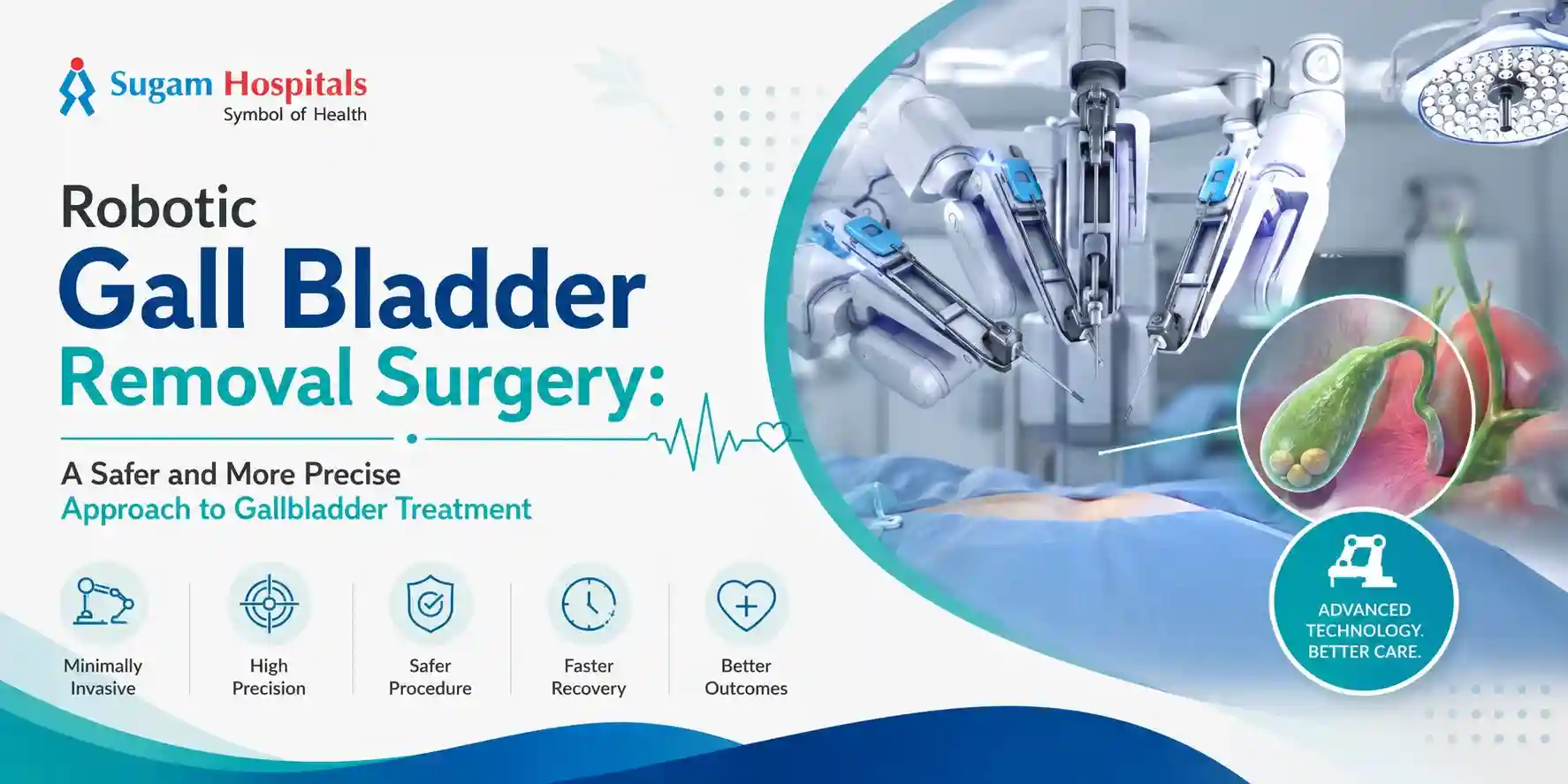
Robotic Gall Bladder Removal Surgery: A Safer and More Precise Approach to Gallbladder Treatment
July 13, 2026 by adminGallbladder diseases such as gallstones, inflammation, infection, and biliary disorders can cause severe abdominal pain, nausea, bloating, and digestive discomfort. When medications and lifestyle modifications fail to provide relief, gallbladder removal surgery (cholecystectomy) is often recommended.
At Sugam Hospital, we provide advanced diagnosis and treatment for gallbladder diseases, including robotic-assisted gallbladder removal surgery, ensuring safe and effective care for patients.
With advancements in surgical technology, robotic gall bladder removal surgery has emerged as one of the most advanced and minimally invasive treatment options. Using robotic-assisted systems, surgeons can perform highly precise procedures with enhanced visualization, improved dexterity, and better control compared to conventional methods. This approach helps reduce surgical trauma, minimizes complications, and supports faster recovery for patients. At Sugam Hospital, our experienced surgical team utilizes advanced robotic technology to deliver personalized gallbladder treatment with a focus on patient safety, comfort, and quicker recovery.
What is Robotic Gall Bladder Removal Surgery?
Robotic gall bladder removal surgery, also known as robotic cholecystectomy, is a minimally invasive procedure performed using a robotic-assisted surgical system. During the procedure, the surgeon controls robotic instruments through a specialized console while viewing the surgical field in high-definition 3D.
The robotic system translates the surgeon’s hand movements into precise micro-movements, enabling accurate dissection and removal of the gallbladder through small incisions. Unlike traditional open surgery, robotic surgery offers greater precision while reducing damage to surrounding tissues.
When is Robotic Gallbladder Surgery Recommended?
Doctors may recommend robotic gall bladder removal surgery for:
- Symptomatic gallstones
- Chronic gallbladder inflammation (chronic cholecystitis)
- Acute gallbladder infection
- Gallbladder polyps
- Biliary dyskinesia
- Gallstone-related pancreatitis
- Recurrent abdominal pain caused by gallbladder disease
The procedure is suitable for many patients who require gallbladder removal and are medically fit for minimally invasive surgery.
How is Robotic Gall Bladder Removal Surgery Performed?
The procedure typically involves the following steps:
1. Anesthesia
The patient receives general anesthesia to ensure a pain-free procedure.
2. Small Incisions
Several tiny incisions are made in the abdomen to insert robotic instruments and a high-definition camera.
3. Enhanced Visualization
The robotic system provides a magnified 3D view of the surgical area, allowing surgeons to identify critical structures more accurately.
4. Gallbladder Removal
Using robotic instruments, the surgeon carefully separates the gallbladder from surrounding tissues and removes it safely.
5. Closure
The small incisions are closed using sutures or surgical adhesive.
Most robotic gallbladder surgeries are completed within a few hours, and many patients can return home the same day or within 24 hours.
Benefits of Robotic Gall Bladder Removal Surgery
Greater Surgical Precision
Robotic systems provide highly controlled instrument movement, helping surgeons perform delicate procedures with exceptional accuracy.
Smaller Incisions
The minimally invasive approach results in less tissue damage and smaller scars.
Reduced Pain
Patients often experience less postoperative pain compared to traditional open surgery.
Faster Recovery
Many individuals resume normal daily activities sooner than with conventional surgery.
Lower Risk of Complications
Enhanced visualization helps surgeons identify important anatomical structures and reduce the risk of bile duct injuries.
Shorter Hospital Stay
Many patients are discharged on the same day or after a brief hospital stay.
Better Cosmetic Results
Smaller incisions generally result in minimal scarring.
Latest Advancements in Robotic Gallbladder Surgery
Robotic surgery continues to evolve with innovative technologies that improve safety and outcomes.
ICG Fluorescence Imaging (Firefly Technology)
One of the most significant advancements is Indocyanine Green (ICG) Fluorescence Imaging. This technology allows surgeons to visualize bile ducts in real time during surgery, helping improve anatomical identification and reducing the risk of accidental bile duct injury.
Single-Incision Robotic Surgery
Advanced robotic platforms now enable selected patients to undergo gallbladder removal through a single incision, often hidden within the navel. This can further reduce visible scarring and improve cosmetic outcomes.
High-Definition 3D Visualization
Modern robotic systems provide magnified 3D imaging, allowing surgeons to distinguish delicate structures more clearly during complex procedures.
AI-Assisted Surgical Research
Researchers are actively developing artificial intelligence-supported robotic systems capable of assisting surgeons with enhanced precision and decision support. While still under development, these innovations may shape the future of gallbladder surgery.
Recovery After Robotic Gall Bladder Removal Surgery
Recovery is generally faster than traditional open surgery.
Immediately After Surgery
- Monitoring in the recovery room
- Walking encouraged within a few hours
- Mild abdominal discomfort may occur
First Week
- Light activities can usually be resumed
- Pain is typically manageable with prescribed medications
- Most patients experience gradual improvement in energy levels
Two to Four Week
- Return to work for many patients
- Increased physical activity as advised by the surgeonLong-Term Recovery
Most patients return to their normal lifestyle without significant dietary restrictions after recovery.
Are There Any Risks?
Although robotic gallbladder surgery is considered safe, potential risks include:
- Bleeding
- Infection
- Injury to nearby organs
- Bile leakage
- Adverse reactions to anesthesia
- Blood clots
Choosing an experienced surgical team can help minimize these risks.
Who is a Good Candidate for Robotic Gallbladder Surgery?
You may be a suitable candidate if you:
- Have symptomatic gallstones
- Require gallbladder removal
- Are medically fit for surgery
- Prefer a minimally invasive treatment approach
- Have not responded to conservative treatment options
A detailed evaluation by a gastrointestinal or robotic surgeon will determine the most appropriate treatment plan.
Robotic Gall Bladder Removal Surgery at Sugam Hospital
Sugam Hospital offers advanced robotic gall bladder removal surgery for patients requiring treatment for gallstones, gallbladder inflammation, infection, and other gallbladder-related conditions. With experienced surgical specialists and advanced robotic-assisted technology, the hospital provides minimally invasive gallbladder treatment aimed at enhancing surgical precision, patient safety, and recovery outcomes. Patients are evaluated individually to determine the most appropriate treatment approach based on their condition and overall health status.
Conclusion
Robotic gall bladder removal surgery represents a major advancement in minimally invasive surgical care. By combining robotic precision, high-definition visualization, and advanced imaging technologies, the procedure offers improved safety, reduced pain, faster recovery, and excellent clinical outcomes. As robotic surgical systems continue to evolve with innovations such as fluorescence-guided imaging and AI-assisted technologies, patients can benefit from increasingly precise and effective gallbladder treatment options.
Frequently Asked Questions
It is a minimally invasive procedure where a surgeon uses robotic-assisted technology to remove the gallbladder with enhanced precision and control.
Robotic surgery often offers smaller incisions, less pain, faster recovery, and improved surgical precision compared to traditional open surgery.
The procedure generally takes between 1 and 3 hours, depending on the patient's condition and surgical complexity.
Most patients can return to normal activities within 1 to 4 weeks, depending on their overall health and recovery progress.
Robotic surgery uses small incisions, resulting in minimal and less noticeable scarring compared to open surgery.
Yes. The liver continues to produce bile, allowing most people to live a normal and healthy life after gallbladder removal.
Yes. When performed by experienced surgeons, robotic cholecystectomy is considered a safe and effective treatment option with a low complication rate.