

Robotic Hernia Surgery: Procedure, Benefits, Recovery and Risks Explained
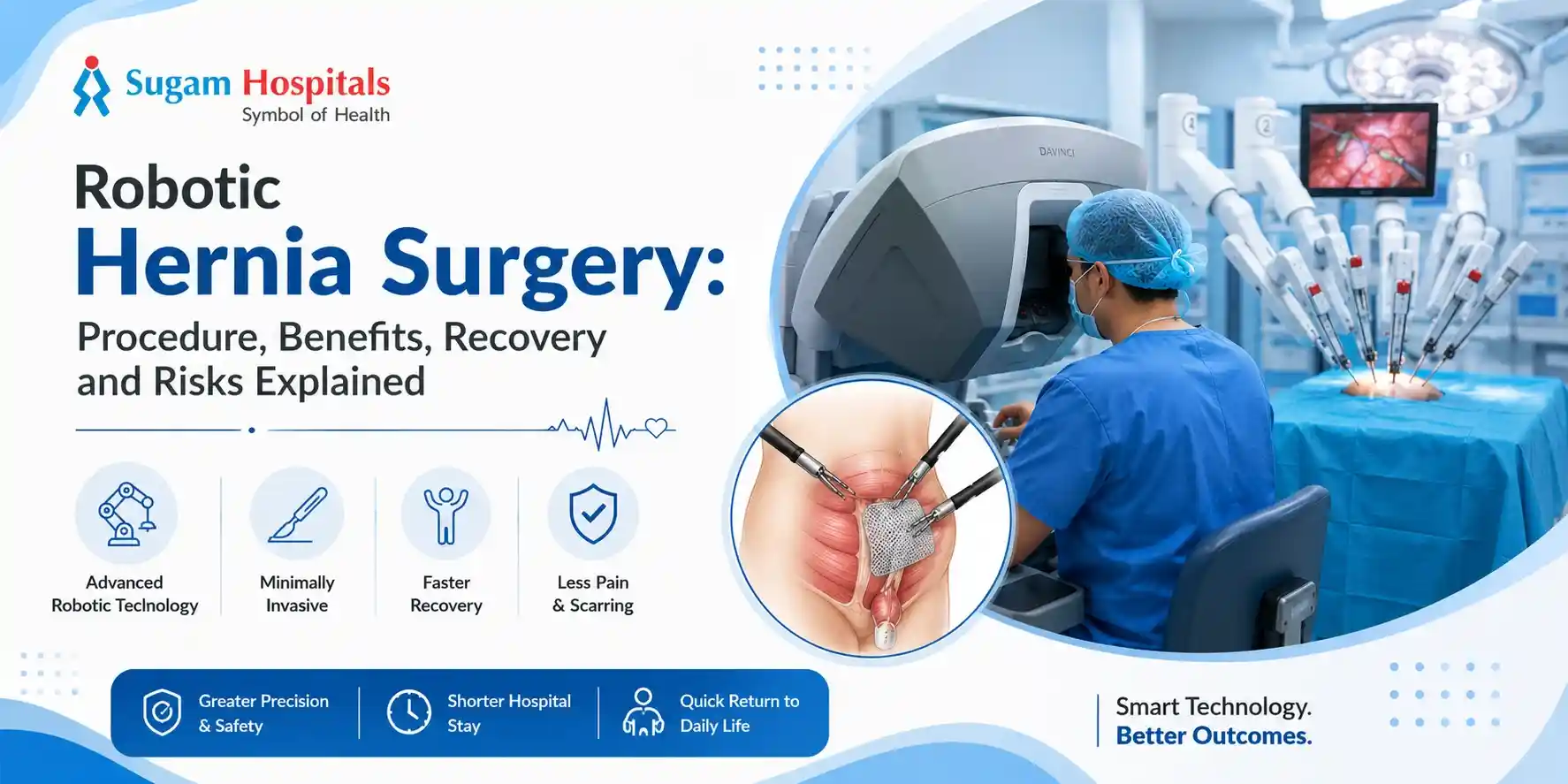
Robotic Hernia Surgery: Procedure, Benefits, Recovery and Risks Explained
July 13, 2026 by adminA hernia occurs when an internal organ or tissue pushes through a weak spot in the surrounding muscle or connective tissue. While some hernias may remain symptom-free initially, many can gradually enlarge and cause discomfort, pain, or complications if left untreated. Surgery is often the most effective treatment to repair a hernia and prevent further issues.
Advancements in surgical technology have transformed hernia treatment over the years. One such innovation is robotic hernia surgery, a minimally invasive approach that combines the expertise of a surgeon with advanced robotic technology to perform precise hernia repairs. This technique offers improved visualization, enhanced dexterity, and greater precision during surgery, helping patients recover faster and return to their daily activities sooner.
In this guide, we explore everything you need to know about robotic hernia surgery, including the procedure, benefits, recovery, risks, and who may be a suitable candidate for this advanced treatment.
What Is a Hernia?
A hernia develops when an organ, fatty tissue, or part of the intestine protrudes through a weakened area of muscle or connective tissue. Hernias can occur in different parts of the body and often become more noticeable when standing, coughing, lifting heavy objects, or straining.
Common Causes of Hernias
Several factors can contribute to the development of a hernia, including:
- Weakness in the abdominal wall
- Heavy lifting
- Chronic coughing
- Obesity
- Pregnancy
- Previous abdominal surgery
- Straining during bowel movements
- Age-related muscle weakness
Common Symptoms of a Hernia
Symptoms may vary depending on the type and size of the hernia but often include:
- A visible bulge or swelling
- Pain or discomfort, especially during physical activity
- A feeling of heaviness in the abdomen or groin
- Burning or aching sensation near the bulge
- Pressure or weakness in the affected area
Types of Hernias Commonly Treated with Surgery
Inguinal Hernia – Occurs in the groin and is one of the most common types of hernias.
Umbilical Hernia – Develops near the belly button when tissue protrudes through the abdominal wall.
Ventral Hernia – Appears in the front abdominal wall.
Incisional Hernia – Occurs at the site of a previous surgical incision.
Femoral Hernia – Develops in the upper thigh or groin region.
Recurrent Hernia – A hernia that returns after a previous repair.
What Is Robotic Hernia Surgery?
Robotic hernia surgery is a minimally invasive surgical procedure used to repair hernias with the assistance of a robotic surgical system. During the procedure, the surgeon controls robotic instruments from a console while viewing the surgical area through a high-definition, magnified 3D image.
Despite the name, the robot does not perform the surgery independently. Every movement is directed by the surgeon, allowing for enhanced precision and control throughout the procedure.
The robotic system provides greater flexibility and range of motion than conventional laparoscopic instruments, making it especially useful for complex and recurrent hernia repairs.
How Does Robotic Hernia Surgery Work?
Robotic hernia repair follows a carefully planned process designed to ensure accurate repair and optimal recovery.
Before Surgery
Prior to the procedure, the surgeon performs a detailed evaluation that may include:
- Medical history review
- Physical examination
- Imaging studies when required
- Assessment of overall health and surgical fitness
- Discussion of treatment options and expected outcomes
Patients are usually given specific instructions regarding medications, fasting, and preoperative preparation.
During Surgery
The procedure is performed under general anesthesia.
Step 1: Small Incisions
Several small incisions are made in the abdomen through which specialized instruments are inserted.
Step 2: Robotic Instrument Placement
The robotic arms are positioned and connected to the surgical instruments.
Step 3: Enhanced Visualization
The surgeon operates from a console while viewing a highly magnified 3D image of the surgical field.
Step 4: Hernia Repair
The protruding tissue is gently returned to its proper position.
Step 5: Mesh Reinforcement
In many cases, a surgical mesh is placed to strengthen the weakened area and reduce the risk of recurrence.
Step 6: Closure
The small incisions are closed using sutures or surgical adhesive.
Conditions That Can Be Treated with Robotic Hernia Surgery
Robotic techniques can be used to repair a wide range of hernias, including:
Inguinal Hernias – Robotic surgery allows precise repair of groin hernias while minimizing tissue trauma.
Bilateral Inguinal Hernias – Both sides can often be repaired during the same procedure.
Ventral Hernias – Robotic technology can help repair abdominal wall defects with greater precision.
Umbilical Hernias – Many umbilical hernias can be effectively repaired using a minimally invasive robotic approach.
Incisional Hernias – Complex incisional hernias often benefit from improved visualization and advanced instrument movement.
Recurrent Hernias – Patients who have experienced hernia recurrence may benefit from robotic-assisted repair techniques.
Benefits of Robotic Hernia Surgery
Robotic hernia surgery offers several potential advantages compared to traditional open surgery.
Enhanced Surgical Precision
The robotic system translates the surgeon’s hand movements into precise instrument actions, allowing accurate tissue dissection and repair.
High-Definition 3D Visualization
Magnified three-dimensional views help surgeons clearly identify anatomical structures and perform complex repairs with confidence.
Smaller Incisions
The procedure requires only a few small incisions, reducing tissue disruption.
Reduced Postoperative Pain
Many patients experience less discomfort compared to traditional open surgery.
Minimal Scarring
Smaller incisions generally result in less visible scars.
Reduced Blood Loss
The precision of robotic instruments may help minimize bleeding during surgery.
Lower Risk of Wound Complications
Smaller surgical openings can reduce the likelihood of certain wound-related issues.
Faster Recovery
Patients often recover more quickly and resume normal activities sooner than with open surgery.
Shorter Hospital Stay
Many robotic hernia procedures can be performed as day-care surgeries or require only a brief hospital stay.
Robotic Hernia Surgery vs Traditional Open Surgery
| Feature | Robotic Hernia Surgery | Open Hernia Surgery |
| Incision Size | small | Larger |
| Pain After Surgery | Typically Less | Usually More |
| Scarring | Minimal | More Visible |
| Recovery Time | Faster | Longer |
| Hospital Stay | Shorter | Longer |
| Visualization | High-Definition 3D View | Direct Surgical View |
| Return to Activities | Earlier | Delayed |
Robotic Hernia Surgery vs Laparoscopic Hernia Surgery
Both robotic and laparoscopic hernia repairs are minimally invasive techniques. However, robotic surgery offers additional technological advantages.
- Similarities
- Small incisions
- Reduced pain
- Faster recovery
- Lower infection risk compared to open surgery
Key Differences
Enhanced Instrument Mobility
Robotic instruments provide greater flexibility and range of motion.
Improved Visualization
The robotic system offers a highly magnified 3D view, whereas traditional laparoscopy generally provides a two-dimensional image.
Better Precision for Complex Cases
Robotic technology can be particularly beneficial for recurrent, large, or technically challenging hernias.
Who Is a Good Candidate for Robotic Hernia Surgery?
Robotic hernia surgery may be recommended for:
- Patients with inguinal hernias
- Individuals with bilateral hernias
- Patients with ventral hernias
- Those with recurrent hernias
- Patients requiring complex abdominal wall reconstruction
- Individuals seeking a minimally invasive treatment option
The suitability of robotic surgery depends on factors such as the type of hernia, medical history, overall health, and surgeon assessment.
Recovery After Robotic Hernia Surgery
Recovery varies from person to person, but many patients experience a relatively smooth recovery process.
First 24 Hours
Mild soreness may occur
Walking is usually encouraged
Most patients can drink fluids and resume light activities
First Week
Gradual improvement in discomfort
Increased mobility
Return to basic daily activities
Weeks 2–4
Continued healing
Reduced pain and swelling
Many patients return to office-based work
Weeks 4–6
Progressive return to exercise
Increased physical activity as advised by the surgeon
Returning to Work
The timeline depends on the nature of the job. Patients with sedentary occupations may return sooner, while those performing heavy physical work may require additional recovery time.
Potential Risks and Complications
Like any surgical procedure, robotic hernia surgery carries certain risks, although serious complications are uncommon.
Potential risks may include:
- Bleeding
- Infection
- Temporary pain or discomfort
- Fluid collection near the repair site
- Mesh-related complications
- Hernia recurrence
- Injury to surrounding structures
Choosing an experienced hernia surgeon and following postoperative instructions can help reduce these risks.
When Should You See a Doctor for a Hernia?
Medical evaluation is recommended if you experience:
- A persistent or enlarging bulge
- Groin or abdominal pain
- Discomfort during lifting or exercise
- Swelling that worsens over time
- Difficulty performing daily activities
- Symptoms that interfere with quality of life
Early diagnosis and treatment can help prevent complications and improve surgical outcomes
Why Choose Sugam Hospital for Robotic Hernia Surgery?
At Sugam Hospital, robotic hernia surgery is performed using advanced minimally invasive surgical techniques with a focus on precision, patient safety, and faster recovery. The surgical team evaluates each patient individually to determine the most appropriate treatment approach based on the type and complexity of the hernia.
Patients benefit from:
- Comprehensive pre-surgical evaluation
- Advanced robotic-assisted surgical technology
- Experienced surgical specialists
- Personalized treatment planning
- Enhanced patient care throughout recovery
- Focus on achieving optimal surgical outcomes with minimal disruption to daily life
From diagnosis and treatment planning to post-operative follow-up, Sugam Hospital is committed to providing patient-centered care and supporting patients at every stage of their hernia treatment journey.
Conclusion
Robotic hernia surgery represents a significant advancement in hernia treatment, offering enhanced precision, improved visualization, and a minimally invasive approach to repair. For many patients, it provides benefits such as smaller incisions, less postoperative discomfort, shorter hospital stays, and faster recovery.
Whether you are dealing with an inguinal, ventral, umbilical, incisional, or recurrent hernia, early evaluation by a qualified surgeon can help determine the most appropriate treatment option. With proper assessment and individualized care, robotic hernia surgery can provide effective and durable hernia repair while helping patients return to their normal lives with confidence.
Frequently Asked Questions
Yes. Robotic hernia surgery is considered a safe and effective treatment option when performed by experienced surgeons.
The duration depends on the type and complexity of the hernia, but many procedures are completed within a few hours.
Most patients experience less postoperative pain compared to traditional open surgery, although some discomfort during recovery is normal.
Many patients return to light activities within a few days and continue to improve over the following weeks.
Yes. Robotic techniques are commonly used for recurrent and complex hernia repairs.
In many cases, surgical mesh is used to reinforce the repair and reduce the risk of recurrence.
Exercise recommendations vary depending on the procedure and individual recovery. Your surgeon will provide personalized guidance.