

Is Palpitation After Climbing Stairs a Warning Sign?
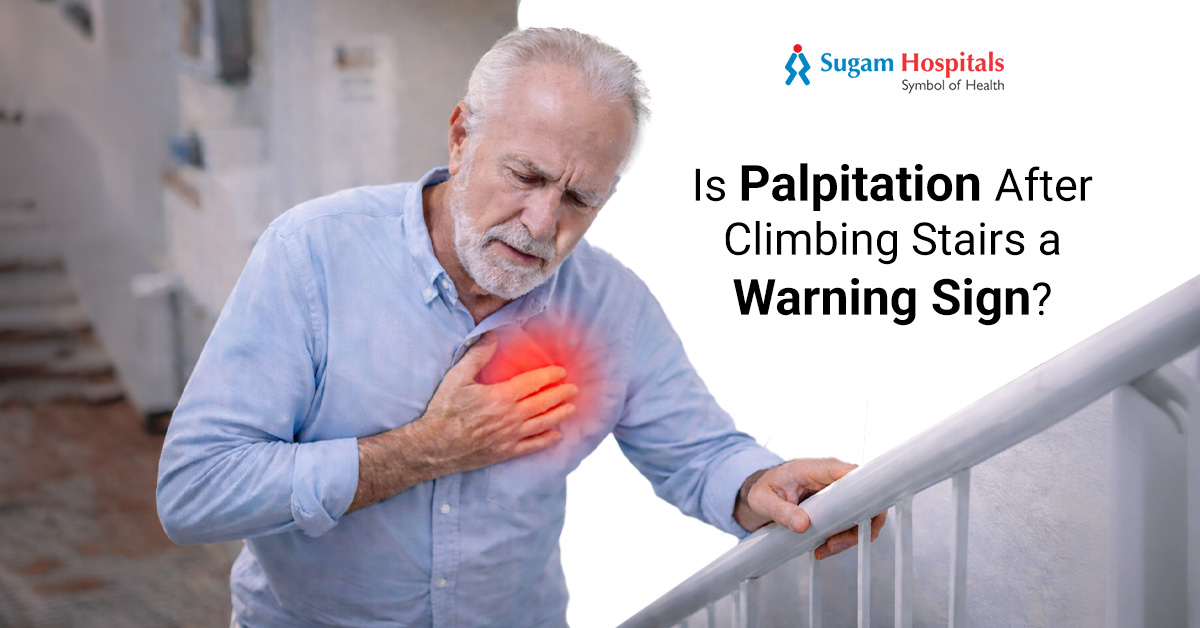
Is Palpitation After Climbing Stairs a Warning Sign?
March 19, 2026 by adminExperiencing an elevated heart rate after ascending a staircase may feel uncomfortable at times as you may return to your normal condition within one minute or have a longer duration of heart racing and sometimes feel out of breath. There have been instances where heart racing feels different than how you may normally experience your heart racing during strenuous exercise. Early identification is important since there are instances where heart racing isn’t always attributed to stress.
If stair climbing consistently results in a person experiencing heart racing, they should consult with a best orthopedist in Chennai regarding knee, hip, or low back pain. When a person cannot move because of physical pain, he or she may become de-conditioned; thus, their heart may react differently after they exert themselves again. Knowing what your body is trying to communicate to you can allow you to take early action with increased confidence.
What exactly is palpitation?
The heartbeat, or heart palpitation, is a sensation experienced as a fast “racing” pulse. You may feel racing, jumping, pounding, or fluttering of your heart within your chest and sometimes feel it in your throat too. As an example below, when you climb stairs, you are increasing the speed of your heart. If the heartbeat feels irregular, much stronger than normal or out of proportion to the level of exertion, it should be examined further.
Why stair climbing triggers palpitations for some people
Climbing stairs can cause intense short bursts of exercise that will engage large muscle groups; therefore, the heart has to supply oxygen to the muscles more quickly and also the heart rate has to increase more quickly than walking. Palpitations during stair climbing can also occur for several other reasons:
- Low physical fitness level following a sedentary lifestyle
- Sudden vigorous exercise without warming up
- Anemia (too few healthy red blood cells) or low hemoglobin
- Dehydration or lack of adequate rest at night
Some people do not have any specific heart issues and instead may have joint pain, knee pain, back pain, etc., making climbing stairs even harder, which may require more exertion from the heart.
When is palpitation a warning sign?
Short-lasting mild palpitations that go away when you stop being active are usually harmless.
But some symptoms should prompt you to seek immediate medical attention:
- If you feel palpitations and have discomfort in your chest (e.g., pressure or pain)
- If you have fainted, are feeling lightheaded or dizzy, or if you are unable to catch your breath after experiencing a racing heart
- If you feel palpitations for more than a few minutes even after resting
- If you have previously diagnosed heart problems, diabetes, or high blood pressure
These types of symptoms could indicate a possible rhythm disorder, poorly controlled blood pressure, or that your heart has increased demands on it.
The link between musculoskeletal health and palpitations
Heart Symptoms and Orthopedic Problems, Although heart symptoms may not seem like an issue, they can often be affected by orthopaedic problems indirectly. A person with knee pain or hip stiffness will typically have reduced activity levels. As they continue to decrease their activity, their stamina also decreases. Therefore, when they perform an energy-intensive activity (such as going up stairs), they may experience palpitations sooner than expected.
Long-term issues with inflammation, weight gain from limited movement, and posture issues can impact how you breathe and, therefore, how hard you must work to keep your heart going.
What you should do immediately
If you feel agitated, take a moment; take a seat; breathe evenly. If you find yourself having trouble breathing, lying flat will likely not help you breathe better. Try to remember what you were doing when your heart began beating rapidly, how long it lasted, and if there were any additional symptoms that were present along with it. All this information will help your physician make an appropriate assessment or diagnosis concerning these recurrent episodes. Do not ignore these types of recurrent episodes, particularly if they continue to become worse each time.
Can lifestyle changes help?
Yes, all of these factors will have an impact on the ability of your body, and especially your heart, to respond to exercise during that time. You should limit or eliminate your use of caffeine and not smoke. Self-medication with medications that are related to heart problems without the advice from a physician is not recommended.
Palpitations after stair climbing are not automatically alarming, but they are not to be brushed aside either. Your body is communicating; listening to it early prevents larger problems later. If joint pain, reduced mobility, or posture strain limits your activity, consulting an ortho doctor can be an important part of the solution as well. At Sugam Hospital, we focus on understanding the whole picture orthopedic health, fitness level, and cardiac risk together, so you receive care that is practical and reassuring from the start.