

Key Benefits of Laparoscopic Surgery for Faster Healing and Comfort
Key Benefits of Laparoscopic Surgery for Faster Healing and Comfort
March 19, 2026 by adminSurgery is one of those words that makes most people stop and think twice. The thought of a long procedure, a large incision, weeks of bed rest, and a slow crawl back to normal life can feel like a lot to take on sometimes enough to push people into delaying care they really cannot afford to put off. That shift in how surgical treatment is experienced is exactly what Laparoscopic Surgery in Chennai has made possible. It is not a shortcut. It is a smarter, more precise way to operate, and for the right patient, what recovery actually feels like is something they notice from the very first day after the procedure.
At Sugam Hospital, laparoscopic surgeries cover a wide range of conditions from gallbladder removal and hernia repair to more involved gynecological and urological procedures all performed by experienced surgeons using technology that is built for accuracy and patient safety.
What Laparoscopic Surgery Actually Involves
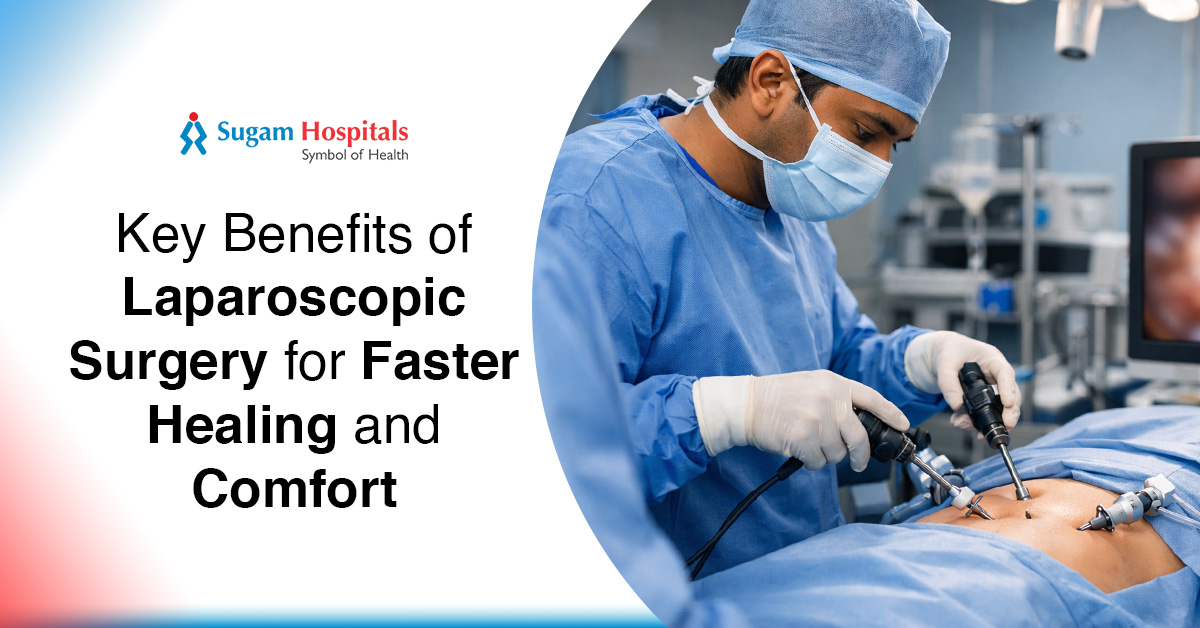
The procedure works through small incisions, typically no longer than a centimeter. A thin tube fitted with a high-definition camera called a laparoscope is carefully inserted through these openings. That camera sends a magnified, real-time image to a monitor, giving the surgeon a detailed, unobstructed view of the operating area without needing to open the body the way conventional surgery requires. Specialized instruments are then passed through additional small incisions to carry out the procedure with precision.
The clinical result is the same as what open surgery achieves. What is different is how much the body actually goes through to get there. That gap matters not just during the operation itself, but in every day of recovery that follows.
Less Trauma to the Body Means Faster Recovery
One of the first things patients notice after laparoscopic surgery is how much more manageable the discomfort is. Open surgery means cutting through layers of muscle and tissue to reach the target area, and the body carries that burden through the entire healing process. Laparoscopy sidesteps that entirely. Because the incisions are small and muscle disruption is kept to a minimum, the pain afterward is considerably lower. The need for heavy pain medication goes down as a result, and most patients feel more like themselves far sooner than they expected.
Hospital stays are shorter too. Many patients go home within a day or two of the procedure. Some leave the same day. That is a real contrast to the week-long admissions that open surgery often demands less time away from the people and responsibilities that do not stop while you are recovering.
Reduced Risk of Complications
Smaller incisions do more than just bring down post-operative pain. They also reduce the chance of complications that are closely tied to large surgical wounds. Some of the advantages patients genuinely benefit from include:
- Lower infection risk: since the surface area of the wound exposed to the environment is far smaller and heals much faster.
- Reduced blood loss: Because the incisions are so small, bleeding during the procedure stays well within a manageable range. Fewer patients need transfusions, and the body simply does not take the same hit it would from open surgery.
- Minimal scarring: Most patients are left with tiny marks that quietly disappear over time. Nothing dramatic, nothing that draws attention, just small signs of a procedure that the skin moves past on its own.
- Lower risk of post-operative hernia: which can develop when large abdominal incisions gradually weaken the surrounding tissue during recovery.
For patients already managing conditions like diabetes, hypertension, or a weakened immune system, these are not just comfort benefits. They are clinical ones that directly affect how safely the surgery can be carried out and how well the body holds up afterward.
Where Laparoscopy Makes the Biggest Difference
Laparoscopic surgery reaches across multiple specialties, addressing conditions that range from straightforward to genuinely complex. At Sugam Hospital, the approach is used for gallbladder removal, appendectomies, hernia repair, bowel resection, hysterectomy, myomectomy, and thyroidectomy among several others.
In gynecological care, it has become the preferred route for fibroid removal and hysterectomy because it gives surgeons the precision they need in a sensitive area while keeping recovery time short. Women are typically back to their regular routines within two to three weeks rather than the six to eight weeks that open surgery usually demands.
In urological care, the value is just as clear. As a trusted Urology Specialist In Chennai, Sugam Hospital uses minimally invasive techniques for conditions involving the kidneys, bladder, and urinary tract areas where getting the procedure right is non-negotiable and how a patient feels during recovery has a direct impact on the overall outcome.
Who Is a Suitable Candidate?
Laparoscopy is not the right fit for every condition or every patient. The decision between a minimally invasive approach and open surgery comes down to the nature of the condition, how complex it is, the patient’s overall health, and the surgeon’s judgment after a thorough assessment. In some situations, a procedure that starts laparoscopically may need to move to open surgery if something unexpected comes up. That is exactly why the experience of the team performing the surgery matters just as much as the tools they are working with.
At Sugam Hospital, every patient is carefully evaluated before a surgical approach is recommended. The aim is never to choose laparoscopy simply because it is less invasive, it is to find the approach that genuinely works best for the individual in front of them.
Surgery does not have to mean weeks of difficult recovery and a long pause on everything that matters to you. When it is performed by the right team with the right tools, laparoscopic surgery lets patients heal faster, stay more comfortable through the process, and get back to the people and responsibilities they care about sooner.