

Laparoscopic Surgery: Benefits, Procedure, Recovery
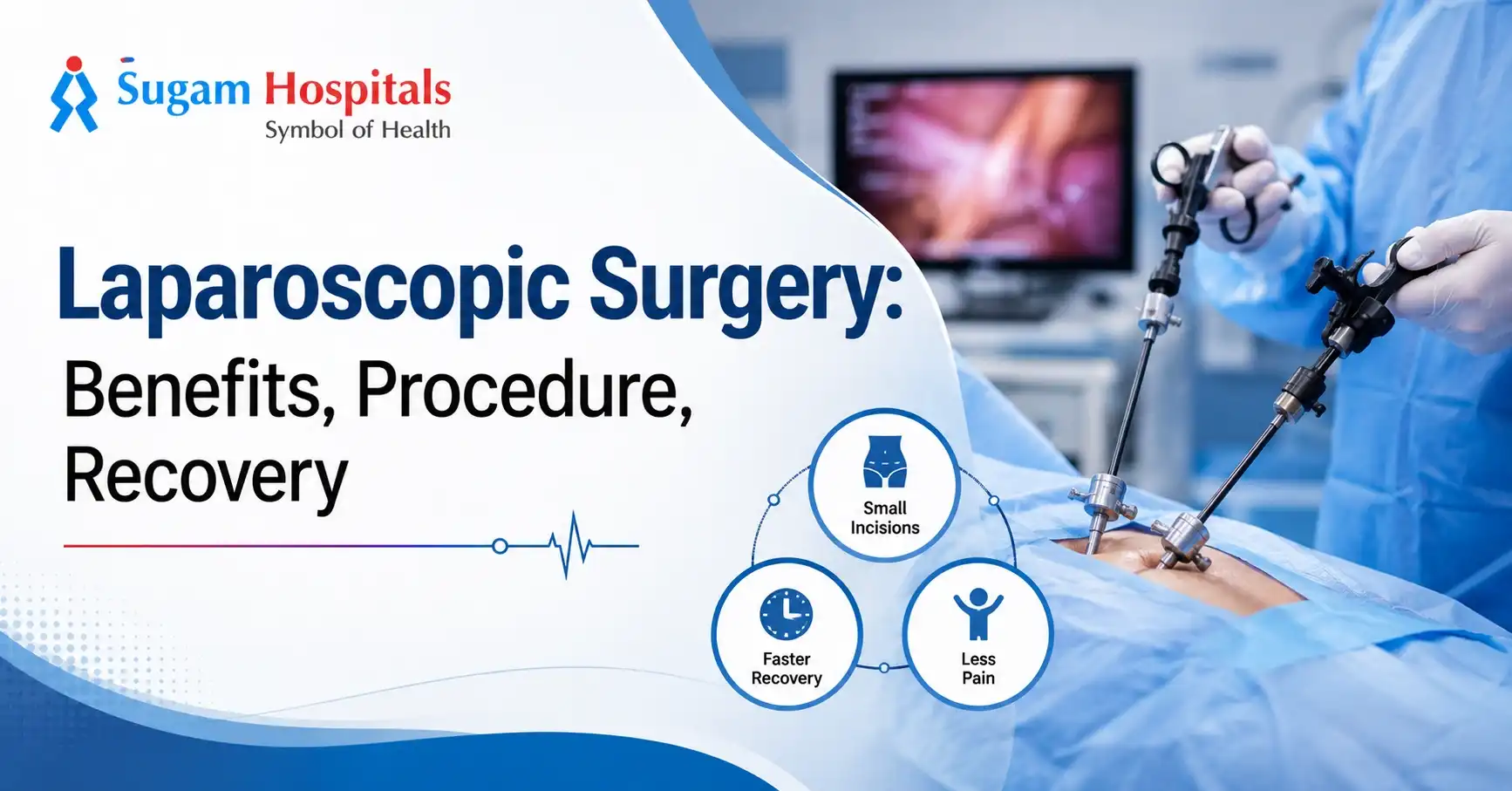
Laparoscopic Surgery: Benefits, Procedure, Recovery
July 28, 2026 by adminQuick Summary
Laparoscopic surgery, also called keyhole or minimally invasive surgery, is a technique where a surgeon operates through 3-4 small incisions (usually under half an inch) instead of one large cut. A thin tube with a camera – the laparoscope – projects a magnified view of your internal organs onto a screen, guiding the surgeon’s instruments in real time.
At Sugam Hospital, our laparoscopic and minimally invasive surgery team performs this procedure daily for conditions ranging from gallstones and hernias to gynecological and gastrointestinal disorders, with an emphasis on safety, precision, and quick recovery.
Key Takeaways
- Laparoscopic surgery uses small incisions and a camera-guided approach instead of a large open cut.
- It’s used for both diagnosis (looking inside the body) and treatment (removing organs or tissue or repairing defects).
- Benefits include less pain, less blood loss, smaller scars, lower infection risk, and faster recovery.
- It is still considered major surgery in many cases, even though it’s minimally invasive.
- Recovery time depends on the specific procedure – ranging from a few days to a few weeks.
- Sugam Hospital offers advanced laparoscopic surgery with experienced surgeons, modern operating theatres, and personalized recovery plans.
What Is Laparoscopic Surgery?
Laparoscopic surgery is a minimally invasive surgical technique in which a surgeon accesses the abdominal or pelvic cavity through small incisions – typically 0.5 to 1 cm – instead of one large opening. A laparoscope (a thin rod fitted with a high-definition camera and light source) is inserted through one incision, while specialized surgical instruments are passed through the others. The camera sends a magnified, real-time image of the internal organs to a monitor, allowing the surgeon to see and operate with precision.
The term “laparoscopy” originally referred to a diagnostic procedure used to examine internal organs and take biopsies when other tests couldn’t identify a problem. Today, “laparoscopic surgery” and “laparoscopy” are often used interchangeably, though technically laparoscopy is about looking, while laparoscopic surgery is about treating.
How Is It Different From Traditional (Open) Surgery?
| Factor | Laparoscopic Surgery | Open Surgery |
| Incision size | 3–4 small cuts (0.5–1 cm each) | One large incision |
| Blood loss | Minimal | Higher |
| Hospital stay | 1–3 days (often day-care for simple cases) | 5–7+ days |
| Scarring | Minimal, barely visible | Larger, more visible |
| Pain after surgery | Mild to moderate | Moderate to severe |
| Return to work | Around 1 week | 4–6 weeks |
| Infection risk | Lower | Higher |
| Suitability | Most gallbladder, hernia, appendix, gynecological, and select cancer surgeries | Complex, high-risk, or emergency cases where laparoscopy isn’t safe |
How Does Laparoscopic Surgery Work? (Step-by-Step Procedure)
Before the Surgery – How Should You Prepare?
- Stop eating, drinking, or smoking after midnight the day before surgery, as instructed by your surgeon.
- Wear loose, comfortable clothing for the day of the procedure.
- Remove jewelry and nail polish (a wedding ring is usually fine).
- Arrange for someone to drive you home, since anesthesia can leave you drowsy.
- Share your full medical history, current medications, and allergies with your surgical team at Sugam Hospital during the pre-op consultation.
During the Surgery – What Actually Happens?
1. Anesthesia: You’re given general anesthesia so you’re fully asleep and pain-free throughout.
2. Creating access: The surgeon makes a small incision near the navel and gently inflates the abdomen with carbon dioxide gas, creating space to see the organs clearly.
3. Inserting the laparoscope: The camera-fitted scope goes in through this incision, projecting live video onto an operating room monitor.
4. Additional incisions: 2–3 more small cuts allow surgical instruments in to perform the actual repair, removal, or biopsy.
5. Completing the procedure: Once done, the gas is released, instruments are withdrawn, and incisions are closed with sutures, surgical glue, or adhesive strips.
Most diagnostic laparoscopies take 30–60 minutes, while laparoscopic surgeries (like gallbladder or hernia repair) typically take 1–3 hours depending on complexity.
After the Surgery – What to Expect Immediately
- You’ll be monitored in a recovery room for about an hour as anesthesia wears off.
- Mild shoulder pain is common – this comes from leftover gas, not the incision itself, and settles within a day or two.
- Your care team will manage pain with medication and check your vitals before discharge.
What Conditions Does Laparoscopic Surgery Treat?
Laparoscopic techniques are now used across multiple specialties:
- Gallbladder removal (cholecystectomy) for gallstones
- Appendix removal (appendectomy)
- Hernia repair (inguinal, umbilical, hiatal)
- Gynecological procedures – ovarian cyst removal, fibroid removal, endometriosis surgery, tubal ligation, ectopic pregnancy management
- Weight-loss (bariatric) surgery, including gastric bypass
- Acid reflux surgery (fundoplication)
- Kidney stone and urological procedures
- Biopsies of abdominal organs or masses
- Select cancer surgeries, including certain colorectal procedures
If you’re unsure whether your condition qualifies for a laparoscopic approach, Sugam Hospital’s surgical team can evaluate your case and recommend the safest, most effective option.
Is Laparoscopic Surgery a Major Surgery?
Yes, in many cases. “Minimally invasive” refers to the size of the incision, not the seriousness of the operation. Many laparoscopic procedures – gallbladder removal, hernia repair, hysterectomy – are still classified as major surgery because they involve anesthesia, internal organ work, and recovery time. Your surgeon at Sugam Hospital will explain exactly how your specific procedure is classified and what to expect.
Benefits of Laparoscopic Surgery
Compared with open surgery, laparoscopic surgery generally offers:
- Smaller scars – often barely visible after healing
- Less blood loss and lower risk of hemorrhage
- Lower infection risk due to smaller wound exposure
- Shorter hospital stay – many patients go home the same or next day
- Faster recovery and quicker return to daily activities and work
- Less post-operative pain, meaning less reliance on strong painkillers
- Clinical literature has also linked laparoscopic approaches to shorter hospital stays and meaningfully lower complication rates compared with open procedures for several common operations.
Risks and Possible Complications
Laparoscopic surgery is very safe, but like any surgery, it carries some risk:
- Bleeding at the incision site
- Accidental injury to nearby organs or blood vessels
- Anesthesia-related reactions
- Infection
- Abdominal swelling or gas-related discomfort
- Rarely, blood clots that could travel to the lungs, heart, or brain
In a small number of cases, the surgeon may need to convert to open surgery mid-procedure if it’s not safe to continue laparoscopically. Sugam Hospital’s operating teams are equipped to handle this transition immediately if it’s ever required, prioritizing your safety above all else.
Recovery After Laparoscopic Surgery
How long does recovery take?
Recovery timelines vary by procedure, but general patterns include:
- First 24-48 hours: Rest at home, manage mild pain and gas-related shoulder discomfort, keep incisions clean and dry.
- Days 2-7: Gradual increase in activity; most people can return to desk-based work within about a week.
- 1-2 weeks: Light exercise can usually resume, with your surgeon’s clearance.
- 4-6 weeks: Full recovery for more complex laparoscopic procedures, including return to strenuous activity.
Home care checklist
- Avoid alcohol for at least 24 hours after surgery.
- Keep incisions clean, dry, and follow your surgeon’s bathing instructions.
- Don’t be alarmed by greenish urine after certain gynecological procedures – this is often from a diagnostic dye, not a complication.
- Expect a few days of irregular bowel movement as digestion normalizes.
- Attend your follow-up appointment so your Sugam Hospital surgeon can confirm healing is on track.
When should you call your doctor?
Contact your surgical team immediately if you notice:
- Fever or chills
- Redness, swelling, or discharge around incisions
- Unusual or heavy bleeding
- Persistent vomiting
- Difficulty urinating
Laparoscopic vs. Open Surgery vs. Robotic Surgery – Which Is Right for You?
- Open surgery remains necessary for complex, high-risk, or emergency situations where laparoscopic access isn’t safe or feasible.
- Laparoscopic surgery is ideal for most routine and many complex procedures, balancing safety, cost, and recovery speed.
- Robotic-assisted surgery offers enhanced precision for select complex cases, though research shows it doesn’t consistently outperform standard laparoscopy on recovery time and comes with a higher cost and longer setup.
Your surgeon at Sugam Hospital will assess your diagnosis, medical history, and the complexity of your condition to recommend the most suitable and cost-effective surgical approach – not simply the newest technology available.
Why Choose Sugam Hospital for Laparoscopic Surgery?
- Experienced surgical team specializing in minimally invasive procedures
- Modern operating theatres equipped with advanced laparoscopic technology
- Personalized pre-op counseling and post-op recovery support
- Transparent guidance on procedure choice, timelines, and cost
- Focus on patient safety, comfort, and faster return to everyday life
If you’re dealing with gallstones, a hernia, persistent abdominal pain, or a gynecological condition and want to explore whether laparoscopic surgery is right for you, book a consultation with Sugam Hospital’s surgical specialists today and get a clear, personalized treatment plan.
Frequently Asked Questions
Most patients experience mild to moderate pain, primarily around the incision sites and sometimes in the shoulder due to residual gas. This is generally well managed with prescribed pain medication and subsides within a few days - significantly less than the pain typically associated with open surgery.
Diagnostic laparoscopy usually takes 30–60 minutes. Laparoscopic surgery for conditions like gallstones or hernias typically takes 1–3 hours, depending on complexity.
Many patients are discharged within 24–48 hours, and some straightforward procedures are even done on a day-care basis. Your Sugam Hospital surgeon will confirm your expected discharge timeline before your procedure.
Yes, in a small percentage of cases. If the surgeon can't safely see or access the area laparoscopically, they will convert to open surgery mid-procedure for your safety. This is a planned safety measure, not a failure.
In most cases, yes - laparoscopic surgery is often preferred for older adults precisely because it involves less blood loss, lower infection risk, and faster recovery. Your surgeon will evaluate your overall health and any pre-existing conditions before confirming eligibility.