

First Aid for Seizures: What to Do in an Emergency
First Aid for Seizures: What to Do in an Emergency
May 6, 2026 by adminWitnessing a seizure for the first time is one of the most frightening experiences a person can have. It happens without warning. The person you are with suddenly loses control of their body, and in that moment, most bystanders freeze not because they do not want to help, but because they genuinely do not know what to do. That gap between wanting to help and knowing how to help is where real harm can occur. The right response to a seizure is not complicated, but it needs to be understood before the moment arrives because in the middle of one, there is no time to think it through. At Sugam Hospital, our top neurologist in Chennai believes that seizure first aid is knowledge every person should have, not just caregivers and medical professionals. It is the kind of information that saves lives in ordinary places.
What Is Actually Happening During a Seizure
A seizure occurs when there is a sudden, abnormal surge of electrical activity in the brain. That surge disrupts normal brain function temporarily affecting movement, sensation, consciousness, or behavior depending on which part of the brain is involved and how widely the activity spreads.
Seizures are not all the same. The dramatic, full-body convulsions that most people picture are called tonic-clonic seizures formerly known as grand mal. But seizures can also present as a brief staring episode, sudden muscle jerks, unexplained fear or confusion, or automatic repetitive movements like lip-smacking or hand-wringing. Recognizing that these very different presentations all fall under the seizure umbrella helps people respond appropriately rather than dismissing a subtle episode as daydreaming or odd behavior.
What to Do : The Right Response
The most important thing to understand about seizure first aid is that most seizures stop on their own within one to three minutes. The role of a bystander is not to stop the seizure — that is not possible without medication but to keep the person safe while it runs its course.
When someone has a convulsive seizure:
- Stay calm and stay with the person, your presence and composure matter more than you realize
- Clear the immediate area of hard or sharp objects that could cause injury during the convulsion
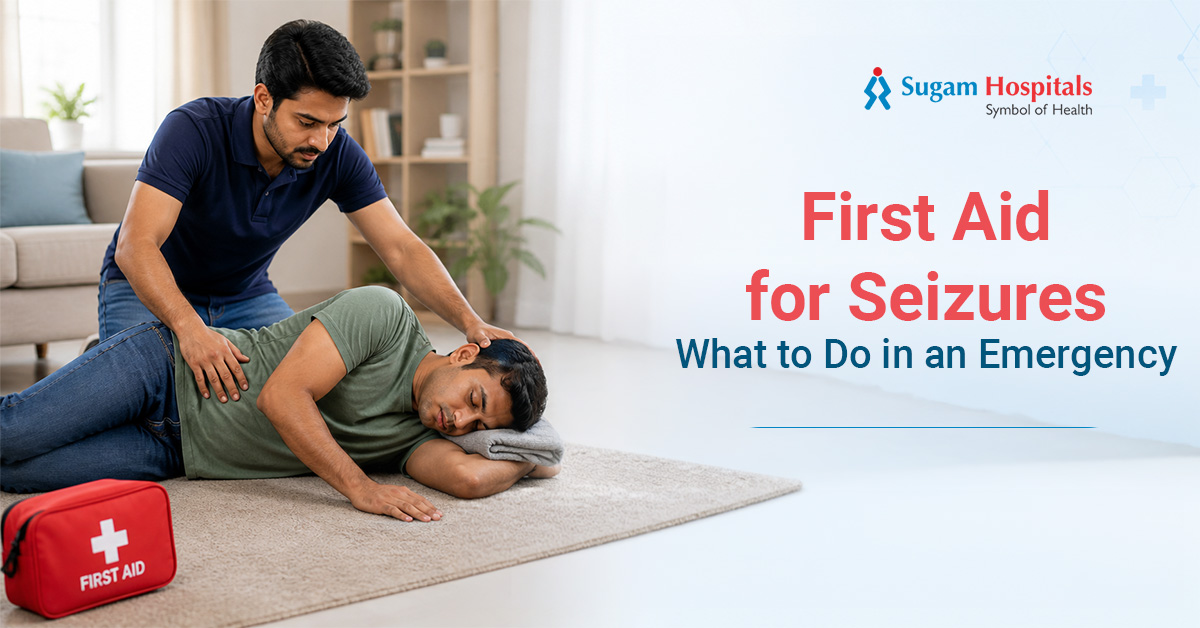
- Cushion the person’s head with something soft, a folded jacket, a bag, your hands to prevent head injury against the ground
- Turn the person gently onto their side if possible, particularly if there is any fluid or vomiting, to keep the airway clear
- Time the seizure from the moment it begins, this information is clinically important afterward
- Do not restrain the person or try to hold their limbs still, this does not help and can cause injury to both the person and yourself
- Do not put anything in their mouth, the idea that people swallow their tongue during a seizure is a myth, and inserting objects creates a real risk of dental injury, jaw injury, and bitten fingers
After the convulsion stops, the person will typically be confused, exhausted, and disoriented a normal post-seizure state called the postictal phase. Stay with them, speak calmly, and reassure them as awareness returns. Do not leave them alone until they are fully alert.
When to Call for Emergency Help
This is the distinction that matters most in the moment. Not every seizure requires an ambulance, but some absolutely do. Call emergency services immediately if:
- The seizure lasts longer than five minutes without stopping
- The person does not regain consciousness or normal awareness after the seizure ends
- One seizure follows another without recovery in between, a condition called status epilepticus that is a medical emergency
- The person is injured during the seizure
- The seizure occurs in water
- The person is pregnant
- This is the person’s first known seizure
- The person has diabetes, heart disease, or another significant medical condition
A seizure that stops within a few minutes in a person with a known epilepsy diagnosis, who recovers normally and has no injury, does not always require emergency intervention. But when in doubt, call. The consequences of underreacting to a prolonged or complicated seizure are far more serious than those of calling for help unnecessarily.
What Happens After: Why Investigation Matters
A first seizure always warrants proper medical evaluation, even if the episode was brief and the person recovered quickly. The investigation has two goals, figuring out if there’s an underlying cause that needs to be treated and understanding whether the person is likely to have more seizures down the line. The usual workup includes blood tests, a brain scan and an EEG to check the brain’s electrical activity. That’s exactly where having one of the trustworthy Diagnostic Labs in Chennai makes a real difference. At Sugam Hospital, our clinical laboratory operates around the clock and is equipped to process the blood investigations that help identify metabolic, infectious, or systemic causes of seizures low sodium, low blood glucose, drug toxicity, and inflammatory markers, quickly and accurately. Combined with our neurology team’s ability to interpret EEG findings and correlate them with imaging, the post-seizure evaluation at Sugam is a connected process rather than a fragmented one.
Living With Epilepsy: What Caregivers Need to Know
For families managing epilepsy long-term, seizure first aid becomes part of daily life rather than an emergency response. Knowing the person’s specific seizure pattern, understanding their medication schedule, recognizing early warning signs, and knowing exactly when to escalate to emergency care are all part of informed caregiving that genuinely improves outcomes.
Epilepsy is a manageable condition for the majority of people who have it. With the right medication, the right monitoring, and a neurologist who knows their case well, most people with epilepsy live full, unrestricted lives. The seizures that do occur are safer when the people around them know how to respond.
Seizure first aid is not complicated. It does not require medical training or special equipment. It requires staying calm, keeping the person safe, and knowing when the situation has crossed into territory that needs emergency care. That knowledge held by more people in more places, directly reduces the harm that seizures cause.
At Sugam Hospital, our top neurologists are committed to both treating epilepsy and educating the communities around it because a well-informed bystander in the right place at the right time is genuinely part of good neurological care.