

Myths and Facts About Painful Periods
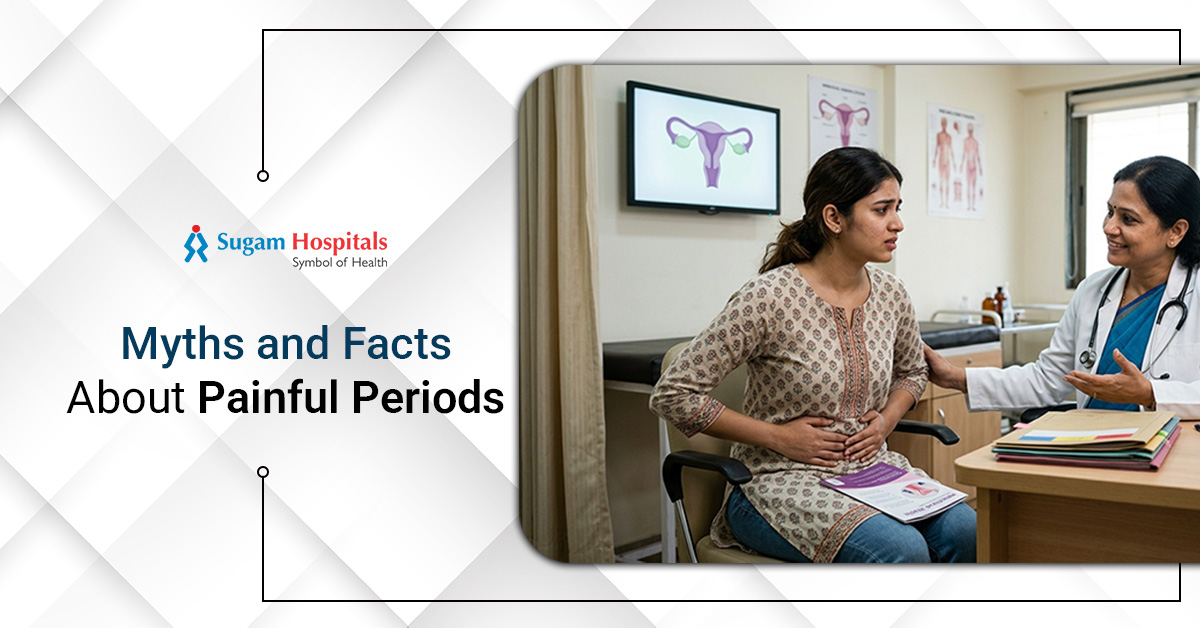
Myths and Facts About Painful Periods
March 24, 2026 by adminEvery month, millions of women show up. To work, to home, to everything life asks of them, while quietly managing pain that nobody really talks about. And the most common thing they’ve been told? “It’s normal. Just bear it.” That sentence has quietly harmed more women than most people realize. If your pain has ever been dismissed or you’ve dismissed it yourself, it’s time to hear the truth. Reaching out to a Gynecologist Specialist In Chennai earlier than you think you need to can change outcomes you didn’t know were at risk.
When pain gets normalized, real conditions go undiagnosed. Sometimes for years. Sometimes until the damage is harder to reverse. So let’s actually talk about it, the myths women have been handed and the facts that should have come instead.
Myth 1: Period Pain Is Always Normal
Here’s the truth: some discomfort during your period is expected. The uterus contracts to shed its lining, and a compound called prostaglandin drives those contractions. Mild cramping? That’s biology. Pain that keeps you in bed, kills your focus, or has you reaching for painkillers every few hours? That’s a different conversation entirely.
Severe period pain has a clinical name dysmenorrhoea. It comes in two forms. Primary dysmenorrhoea is pain without an underlying condition, common in younger women. Secondary dysmenorrhoea is pain caused by something endometriosis, fibroids, adenomyosis, or ovarian cysts. One in ten women globally has endometriosis. The average time to diagnosis? Seven to ten years. Mostly because women were told their pain was just periods. Your pain deserves an answer. Not an assumption.
Myth 2: If You Can Still Function, It’s Not That Serious
Women are built to push through. That’s not always a good thing when it comes to health. The fact that you can manage your day doesn’t mean your pain is medically insignificant, it might just mean you’ve gotten very good at coping.
What doctors actually look for goes beyond “how bad is it on a scale of one to ten.” The pattern tells the real story. Ask yourself:
- Is the pain getting worse with each cycle?
- Does it last beyond the first two days?
- Do you feel it in your lower back or legs too?
- Is it accompanied by heavy bleeding or pain during sex?
Any combination of these signals is worth bringing to a doctor. Not next year. Now.
Myth 3: Heavy Bleeding Is Just How Some Women Are Built
Heavy periods medically called menorrhagia are incredibly common. And incredibly under-discussed. Soaking through a pad or tampon within an hour, passing clots larger than a coin, or bleeding for more than seven days is not a personality trait. It’s a symptom.
Conditions linked to heavy bleeding include:
- Uterine fibroids (non-cancerous growths that affect up to 70% of women by age 50)
- Hormonal imbalances, particularly involving oestrogen and progesterone
- Uterine polyps
- Adenomyosis, where uterine lining grows into the muscle itself
One consequence that rarely gets connected: iron deficiency anaemia. The constant fatigue, the brain fog, the low energy that so many women chalk up to being busy, it’s often rooted in blood loss that’s never been properly addressed.
Myth 4: Teenagers Are Too Young to Have Gynaecological Issues
This one does real damage. Endometriosis frequently begins during adolescence, yet diagnosis rarely happens until adulthood. Sometimes not until a woman is trying to conceive and running into unexplained fertility problems by which point years have passed.
Early evaluation doesn’t mean jumping to procedures. It means listening, asking the right questions, and monitoring carefully. A teenage girl who dreads her period every month and misses school because of it is not being dramatic. She deserves to be taken seriously.
The earlier something is found, the more options exist. That’s simply how medicine works.
Myth 5: Painkillers Are the Only Option
This is actually where things get hopeful. Because there’s far more available than most women are told.
Depending on what’s causing the pain, treatment can include:
- Hormonal therapy to regulate cycles and reduce inflammation
- Dietary changes, magnesium-rich foods and reducing refined sugar can genuinely lower prostaglandin activity
- Minimally invasive surgery like laparoscopy, which can diagnose and treat endometriosis in one procedure
- Targeted management for fibroids or polyps based on size, location, and your reproductive goals
Not a generic protocol. A real, individual approach built around your body and your life.
What Should Actually Send You to a Doctor
You don’t need to be in crisis to seek help. Go when:
- Pain regularly disrupts your routine or sleep
- Your flow has changed significantly in heaviness or duration
- You experience pain outside your period: mid-cycle, during sex, or in your lower back
- Painkillers that used to work simply don’t anymore
- Something just feels different from your normal
Your Pain Has a Story: It’s Time Someone Listened
Painful periods are not a life sentence. They are a signal. And signals, when heard early, lead to real answers not just reassurance. At Sugam Hospital’s Woman & Child Centre, no woman is told to simply manage and move on. Every concern, whether you’ve carried it for a month or a decade, is treated with the seriousness it deserves. If your body has been trying to tell you something, a trusted Gynecologist Specialist in Chennai at Sugam Hospital is ready to listen and to help you find the clarity you’ve been waiting for.