

What Is Sarcoma? Understanding This Rare Type of Cancer
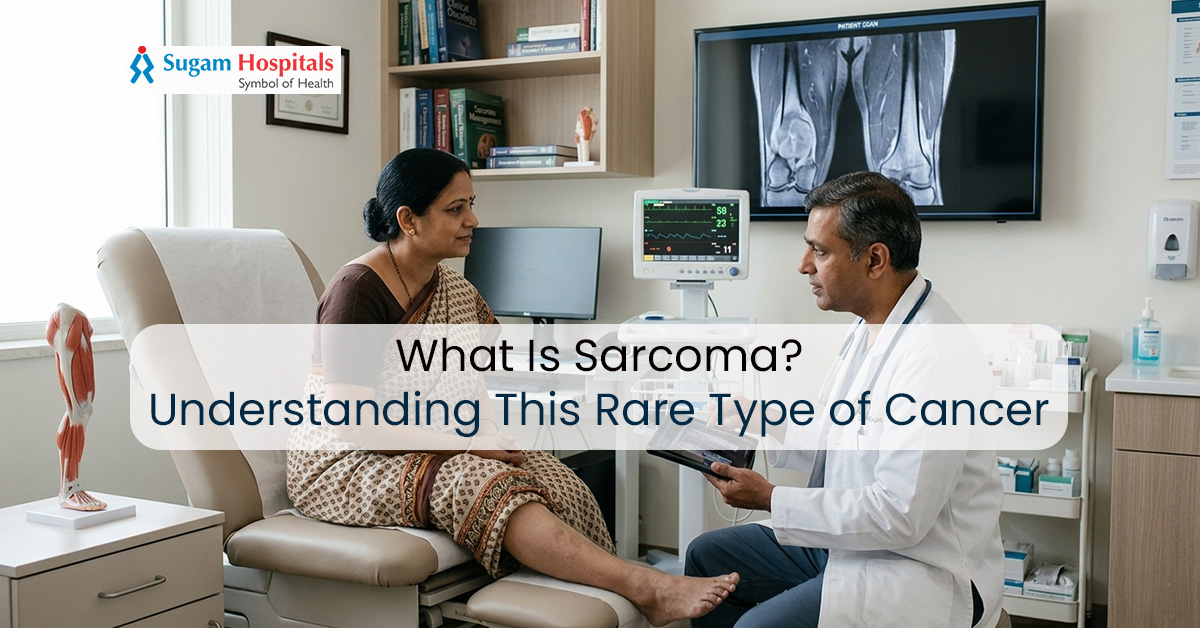
What Is Sarcoma? Understanding This Rare Type of Cancer
March 25, 2026 by adminMost people have heard of cancer in the context of organs breast cancer, lung cancer, colon cancer. Sarcoma sits outside that familiar framing entirely. It is not a cancer of organ tissue. It is a cancer of the body’s structural tissues the bones, muscles, fat, cartilage, blood vessels, and connective tissue that hold everything else together. That distinction matters clinically, because sarcoma behaves differently, responds to treatment differently, and is missed far more often than cancers that fit the more recognizable pattern. At Sugam Hospital, one of the leading Cancer Hospital in Chennai, we believe that understanding what sarcoma actually is before a diagnosis ever lands in front of you is knowledge worth having. Rare does not mean impossible, and early awareness is still the most powerful tool available.
What Makes Sarcoma Different From Other Cancers
Cancer, broadly speaking, begins when cells grow and divide in a way that is no longer controlled. Most cancers called carcinomas originate in the epithelial cells that line organs and surfaces throughout the body. Sarcoma is different. It originates in mesenchymal cells the cells that give rise to connective tissue, bone, cartilage, fat, and muscle.
This is not just a biological technicality. It means sarcoma can develop almost anywhere in the body, in tissues that oncologists are not always immediately thinking of when a patient presents with a lump or persistent pain. It means imaging and biopsy interpretation require specific expertise. And it means the treatment pathways surgery, radiation, chemotherapy, and increasingly targeted therapies look different from those used for carcinomas, even when the same words are being used to describe them.
The Two Main Categories
Sarcomas are broadly divided into two groups, and understanding the difference helps make sense of how the disease is discussed and treated.
Soft tissue sarcomas develop in the muscles, fat, blood vessels, nerves, tendons, and the deep layers of skin. They can arise virtually anywhere in the body but are most commonly found in the limbs, the abdomen, and the chest wall. They account for the majority of sarcoma cases.
Bone sarcomas originate in the bone itself. The two most recognized types are osteosarcoma which most commonly affects adolescents and young adults, typically around the knee and Ewing sarcoma, which can occur in both bone and soft tissue and also tends to present in younger patients. Chondrosarcoma, which arises from cartilage cells, is more common in adults over 40. The distinction between these two categories shapes everything from the diagnostic workup to the treatment approach and the long-term monitoring plan.
Why Sarcoma Gets Missed
This is one of the more uncomfortable truths about sarcoma, it is genuinely easy to overlook, especially in the early stages. A soft tissue sarcoma in the thigh might present as a lump that feels harmless and painless for months. A bone sarcoma might be initially attributed to a sports injury or growing pains in a teenager. The symptoms, when they do appear, are rarely dramatic enough to trigger immediate concern.
Signs that warrant proper investigation rather than watchful waiting include:
- A lump or swelling that is growing, regardless of whether it is painful
- A soft tissue mass larger than five centimeters, roughly the size of a golf ball
- A lump that sits deep in the tissue rather than just beneath the skin surface
- Bone pain that is persistent, worsens at night, and has no obvious mechanical cause
- Unexplained swelling in a limb accompanied by restricted movement
None of these symptoms confirm sarcoma. But each of them deserves a proper clinical evaluation rather than reassurance based on appearance alone.
How Sarcoma Is Diagnosed
Accurate diagnosis of sarcoma requires a combination of imaging and tissue analysis and crucially, it requires that both be interpreted by people with specific experience in sarcoma. A general radiologist and a sarcoma-experienced radiologist looking at the same MRI scan can reach meaningfully different conclusions. The same applies to pathology.
The diagnostic pathway typically involves:
- MRI for soft tissue sarcomas: providing detailed information about the tumor’s size, location, and relationship to surrounding structures
- CT scan for staging: assessing whether the disease has spread, particularly to the lungs, which is the most common site of sarcoma metastasis
- Bone scan or PET CT: in specific cases to evaluate bone involvement or distant spread
- Biopsy: the definitive step, where a tissue sample confirms the diagnosis and identifies the specific subtype of sarcoma
The biopsy approach matters more than most patients realize. A poorly planned or poorly executed biopsy can complicate subsequent surgery significantly. This is one of the clearest arguments for having sarcoma managed at a center with genuine oncological depth from the very beginning. Accessing the best diagnostic centre Chennai that combines advanced imaging with experienced pathology interpretation is not a secondary consideration, it is where accurate diagnosis either happens or does not.
Treatment: More Individualized Than Most People Expect
Sarcoma treatment is not a single protocol applied uniformly. It is a highly individualized plan built around the specific subtype, location, stage, and the patient’s overall health. Surgery remains the primary treatment for most localized sarcomas, with the goal of complete removal while preserving as much function as possible. Radiation therapy is used before surgery to shrink tumors or after surgery to reduce recurrence risk. Chemotherapy plays a significant role in high-grade and metastatic cases, and certain subtypes particularly gastrointestinal stromal tumors respond remarkably well to targeted therapy drugs that have transformed outcomes over the past two decades.
Sarcoma is rare, but rare is not the same as exceptional. It affects people across all age groups, in all kinds of tissue, and often without the kind of dramatic early symptoms that prompt urgent medical attention. What makes the difference in outcomes consistently, across the literature and in clinical practice is how early the diagnosis is made and how experienced the team managing it is.
At Sugam Hospital, our oncologist and our diagnostic centre work together to ensure that a rare diagnosis does not mean a delayed one. Because when it comes to sarcoma, the window between early and late matters more than almost anything else.